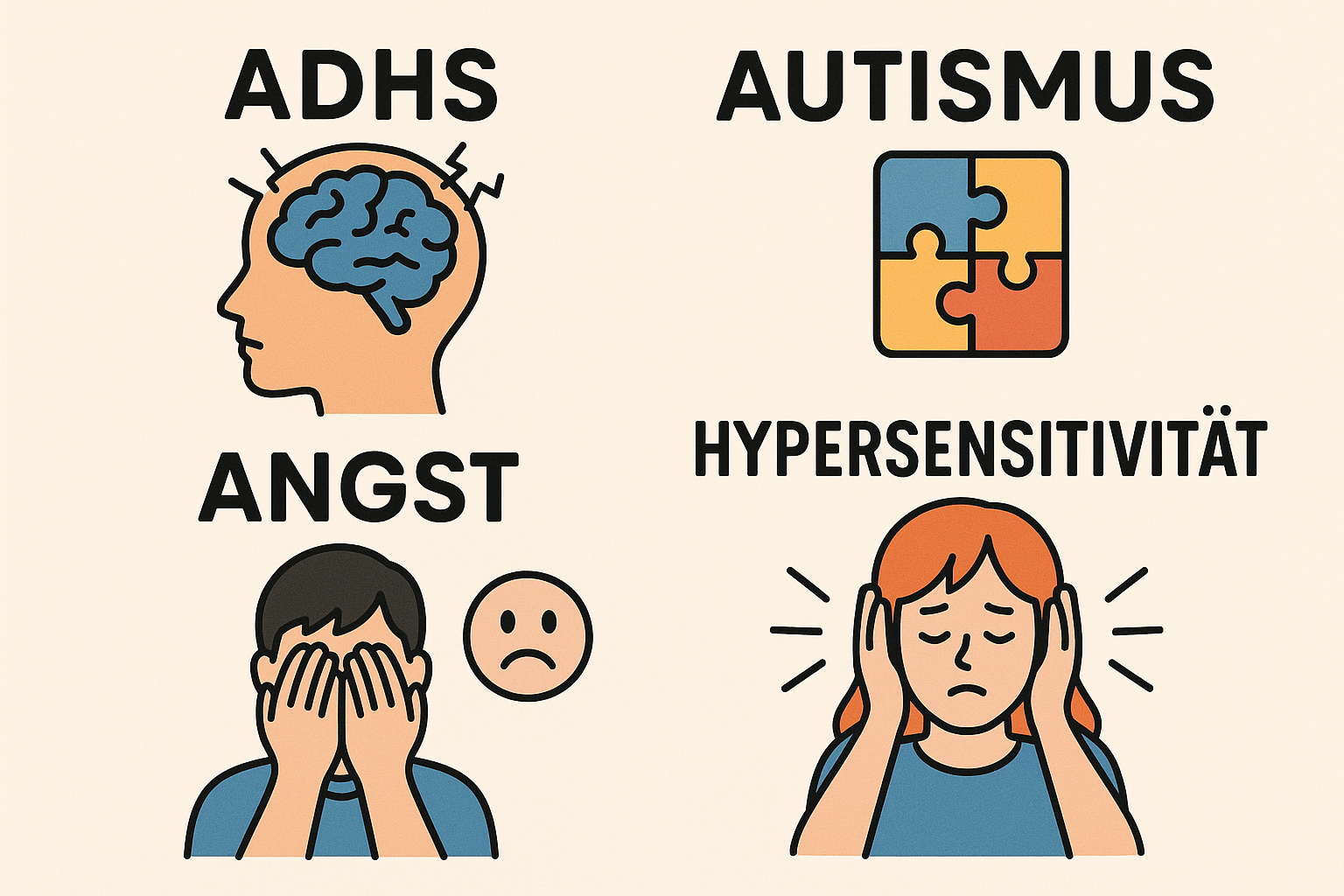
-
Anxiety and sensory sensitivity in autism and ADHD
Part 4 of the article series on the Biomarker Workshop 2025 86% of autistic adults report daily problems with anxiety. This figure shows that anxiety in autism is not the exception but a central part of the experience. Anxiety disorders in autism: the figures Research by Zaboski et al. (2018) documents the various anxiety disorders…
-
Camouflaging – the exhausting art of masking
Part 3 of the article series on the Biomarker Workshop 2025 “I can dance. I can dance with anyone who wants to dance with me, but it is always their choreography.” This quote aptly describes what many autistic people – especially women – experience every day: they have learned to adapt, to follow social rules…
-
ADHD in women and girls – the invisible challenge
Part 2 of the article series on the Biomarker Workshop 2025 ADHD in girls and women often goes unrecognised for years. Unlike boys, who more often stand out through hyperactive and impulsive behaviour, girls show subtler symptoms – and are therefore systematically overlooked. Early signs: the daily struggle begins According to Attwood and Garnett, many…
-
AuDHD – when autism and ADHD meet
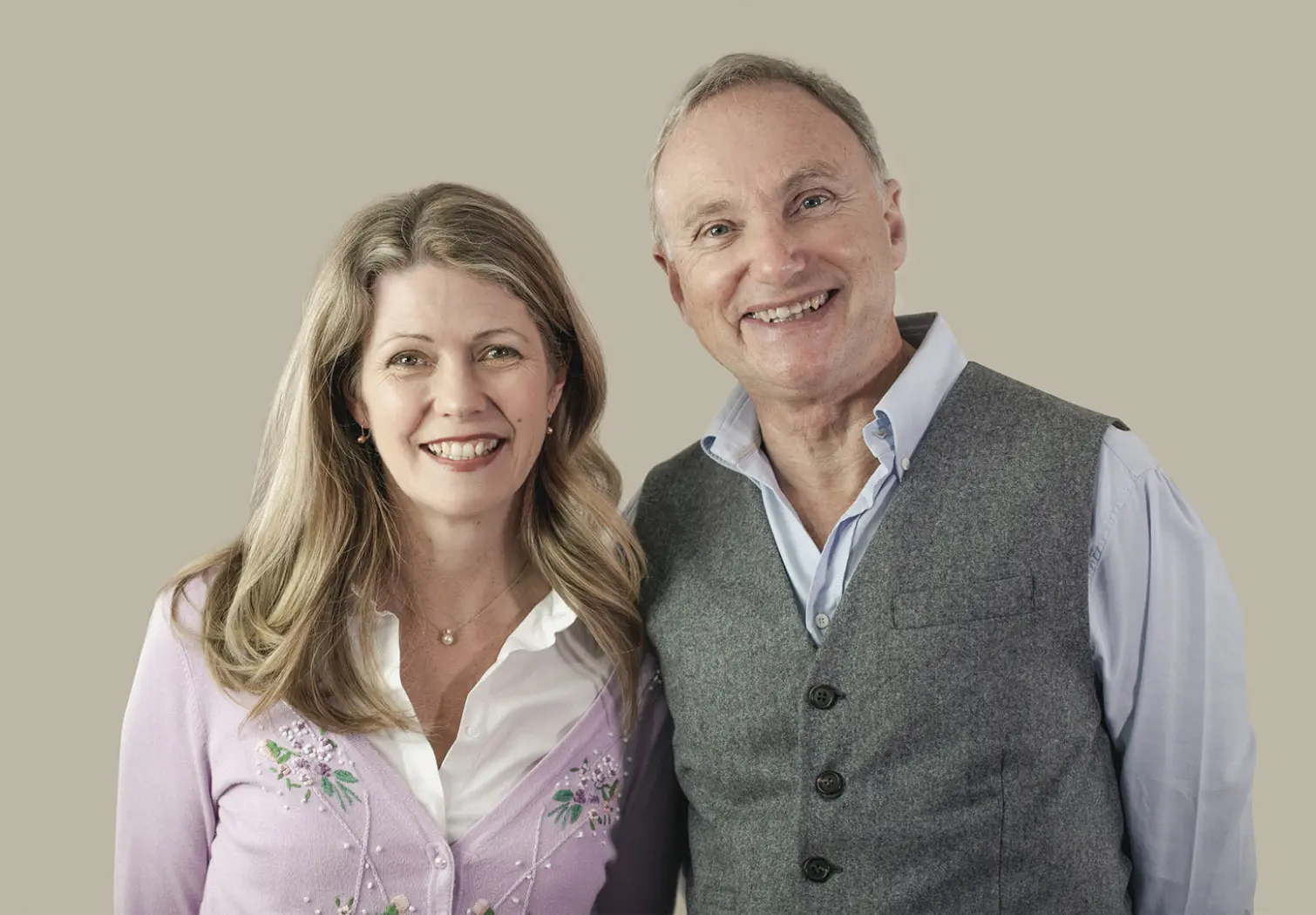
Insights from 80 years of clinical practice by Prof. Tony Attwood and Dr Michelle Garnett Part 1 of the article series on the Biomarker Workshop 2025 For a long time, autism and ADHD were regarded as mutually exclusive diagnoses. Only with the DSM-5 revision in 2013 was it recognised what those affected and experienced clinicians…
-
When subjective experience and objective measurement complement each other
Integrating neurobiological diagnostics in child and adolescent psychiatry – a unifying approach for ADHD, autism, anxiety disorders and hypersensitivity A bridge-builder between worlds Dr. med. Birgit Graf, specialist in child and adolescent psychiatry and psychotherapy, embodies an approach that connects rather than divides. As medical director of BrainARC-Ostschweiz, she has for years successfully integrated the…
-
Between worlds: Matthias Huber and the therapeutic power of lived experience
The bridge-builder who understands both sides Whenever Matthias Huber leaves his house, he always carries a cap, noise-cancelling headphones and sunglasses. Not for reasons of fashion, but as a shield against a world that is often overwhelming for him. Stimuli that other people barely notice can feel like electric shocks to the 56-year-old psychologist. Matthias…
-
Dimensional diagnostics: why we should diagnose patterns rather than pigeonholes
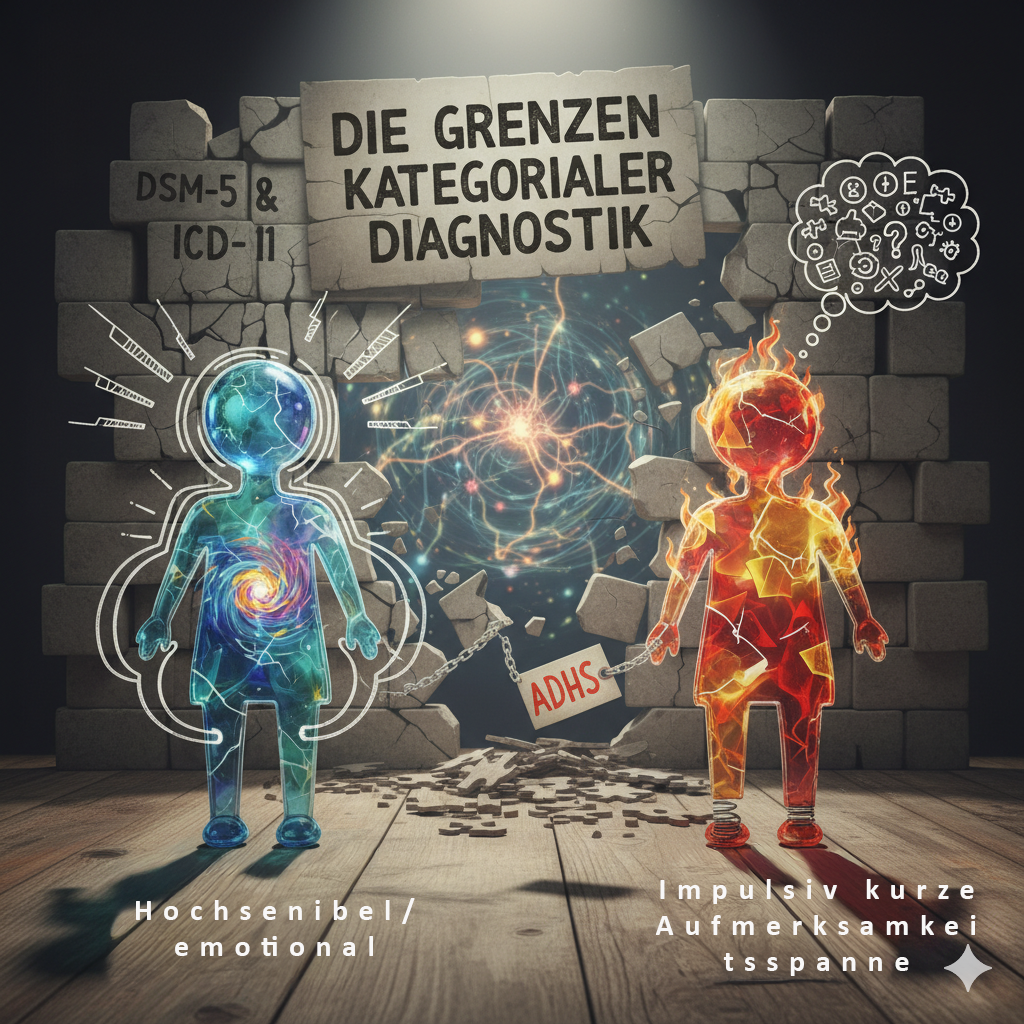
Psychiatric diagnostics is facing a paradigm shift. While for decades we have tried to fit our patients into clearly delineated diagnostic categories – ADHD, autism, anxiety disorder, hypersensitivity – current research paints a completely different picture: these conditions overlap massively. The sharp boundaries suggested by our diagnostic manuals do not exist in reality. What we…
-
BrainARC Zürich: where brain function and clinical expertise meet
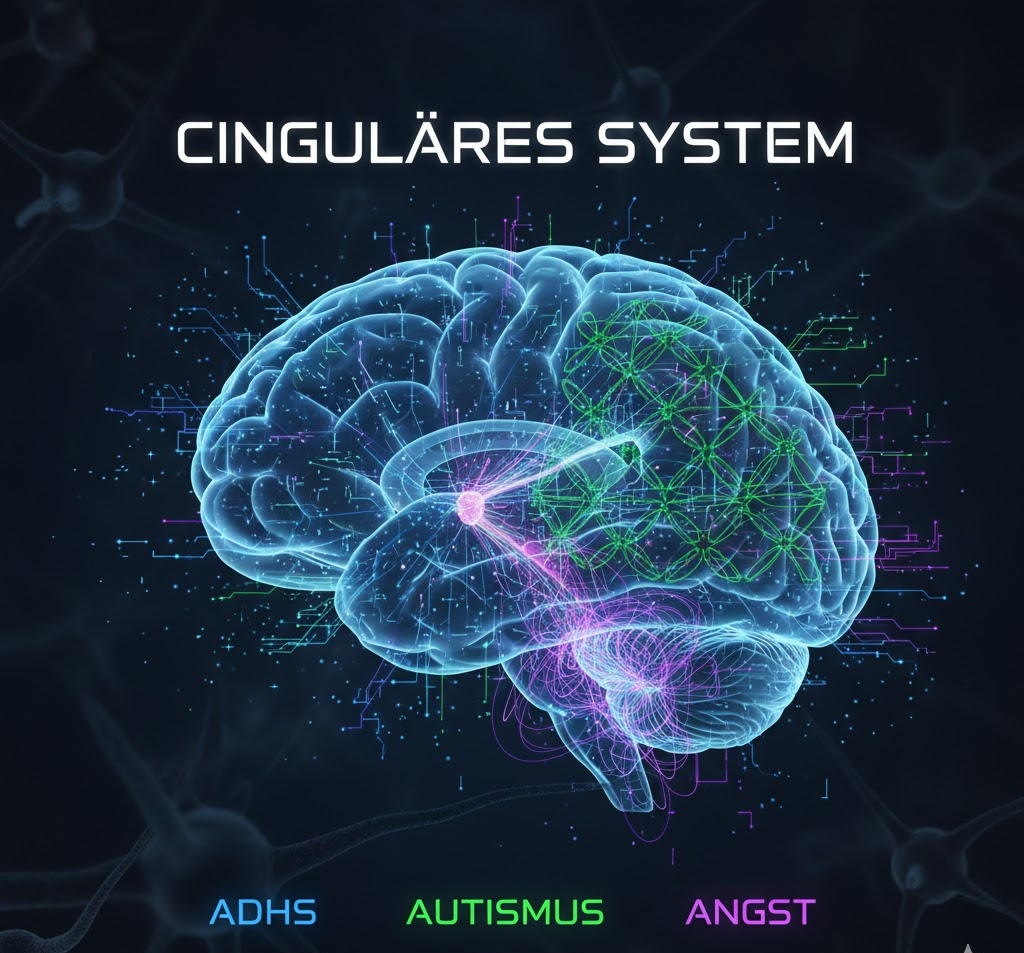
Neurobiological precision in clinical practice: Dr Corinne Henzen and the integration of objective markers BrainARC Zürich occupies a special position in Switzerland’s psychiatric care landscape. The competence centre, with 14 highly qualified specialists from psychology, neuropsychology, medicine and administration, is consistently committed to an integrative approach: combining traditional clinical expertise with objective neurobiological measurements. This…
-
How Skopje and the GTSG are making the biological basis of autism more objectively diagnosable
Scientific excellence meets clinical implementation When Prof. Dr Silvana Markovska-Simoska and Dr Aleksandar Tenev present their talk “Neurophysiological Recognition and Its Implementation in Clinical Practice” at the 14th Biomarker Workshop in Zurich on 11 December 2025, they will demonstrate more than research findings: they will show how objective biomarker diagnostics for autism is moving from…
-
Manifesto for integrating brain function analysis into psychiatric diagnostics
Preamble: from either-or medicine to both-and medicine Modern psychiatry is at a turning point. With more than 970 million people worldwide affected by mental disorders, and diagnostic agreement rates for major depression reaching kappa values of just 0.28–0.32, it is time to expand our diagnostic tools. Brain function analysis (BFA) is not a competitor to…
-
The economic costs of diagnostic inaccuracy: Why objective biomarkers represent an investment in the future
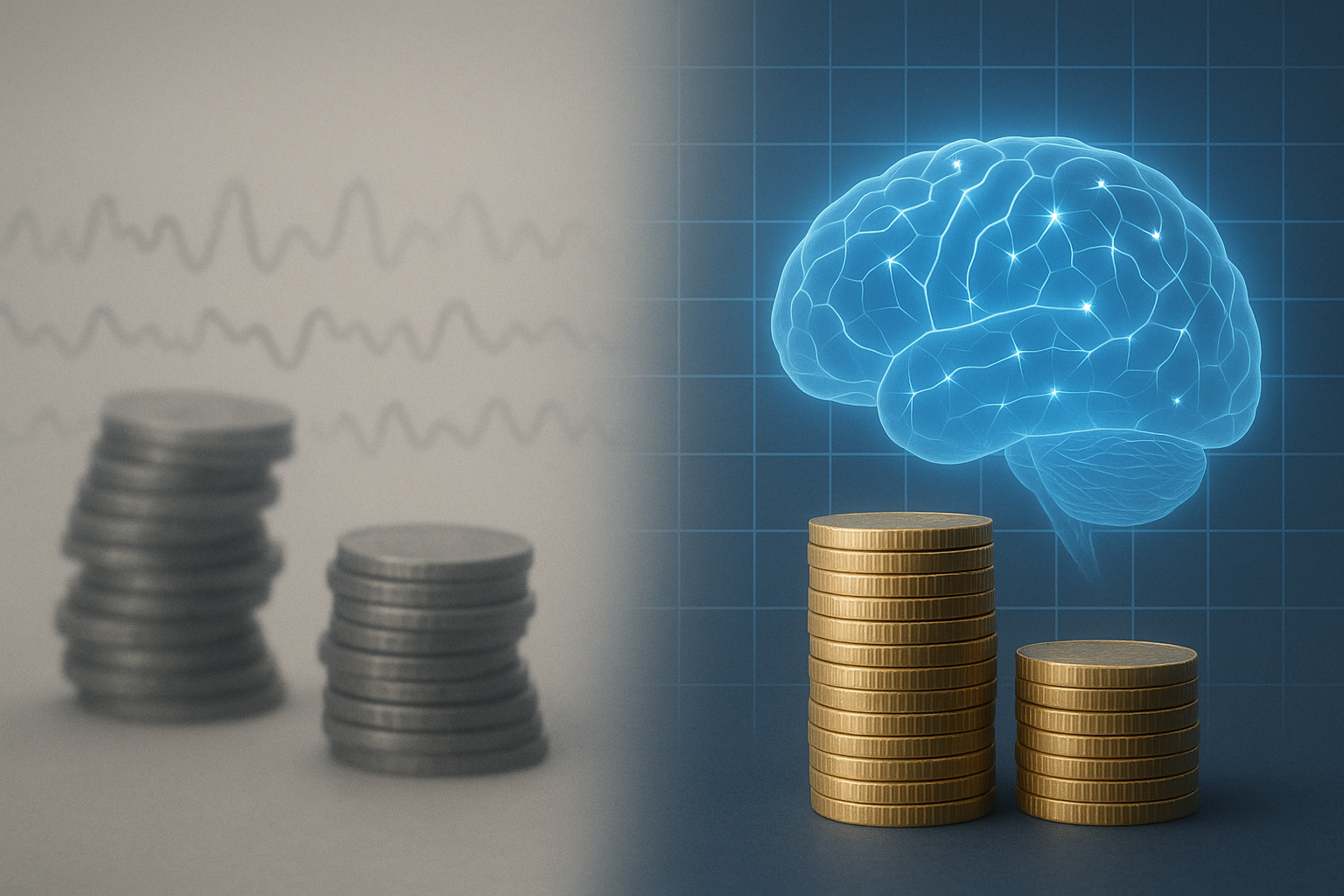
The scientific evidence for the superiority of neurobiological biomarkers over subjective diagnostic methods is supported by a convincing health economic analysis that highlights the hidden costs of current diagnostic inaccuracy. The hidden cost burden of incorrect diagnoses The systematic reliability problems of psychiatric diagnostics lead to enormous, often invisible costs in the healthcare system. If…
-
Precision medicine through EEG-based vigilance profiles: Individual attention patterns in children

Challenges resulting from cognitive load or mental overload may require adjustments to the task structure, for example by dividing it into smaller units or incorporating regular breaks. However, the study also has limitations, in particular the moderate variance explanation of R² = 0.2, which could limit the application of the model to assign individuals to…
-
From subjective to subjective-objective: Why biomarkers are revolutionizing psychiatric diagnostics
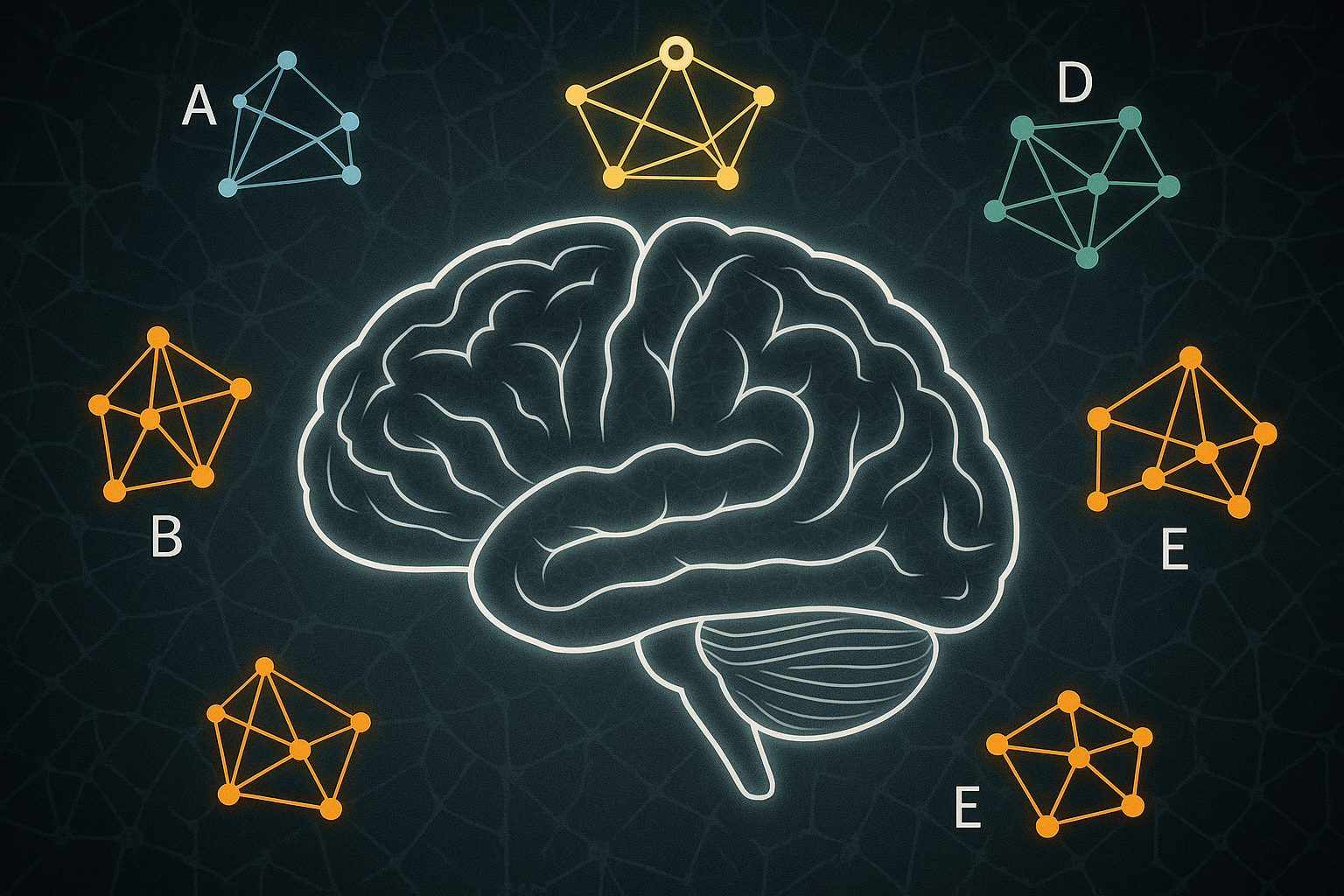
The silent challenge of modern psychiatry Over 970 million people worldwide are affected by mental disorders, yet in 2025 psychiatric diagnosis will still be based primarily on subjective symptom assessments and clinical interviews. This reality may come as a surprise, given the exponential advances in neuroscience in recent decades. A comprehensive systematic analysis of the…
-
Interrater-Reliabilität in der Psychiatrie: Quantitative Evidenz für systematische Diagnostikfehler
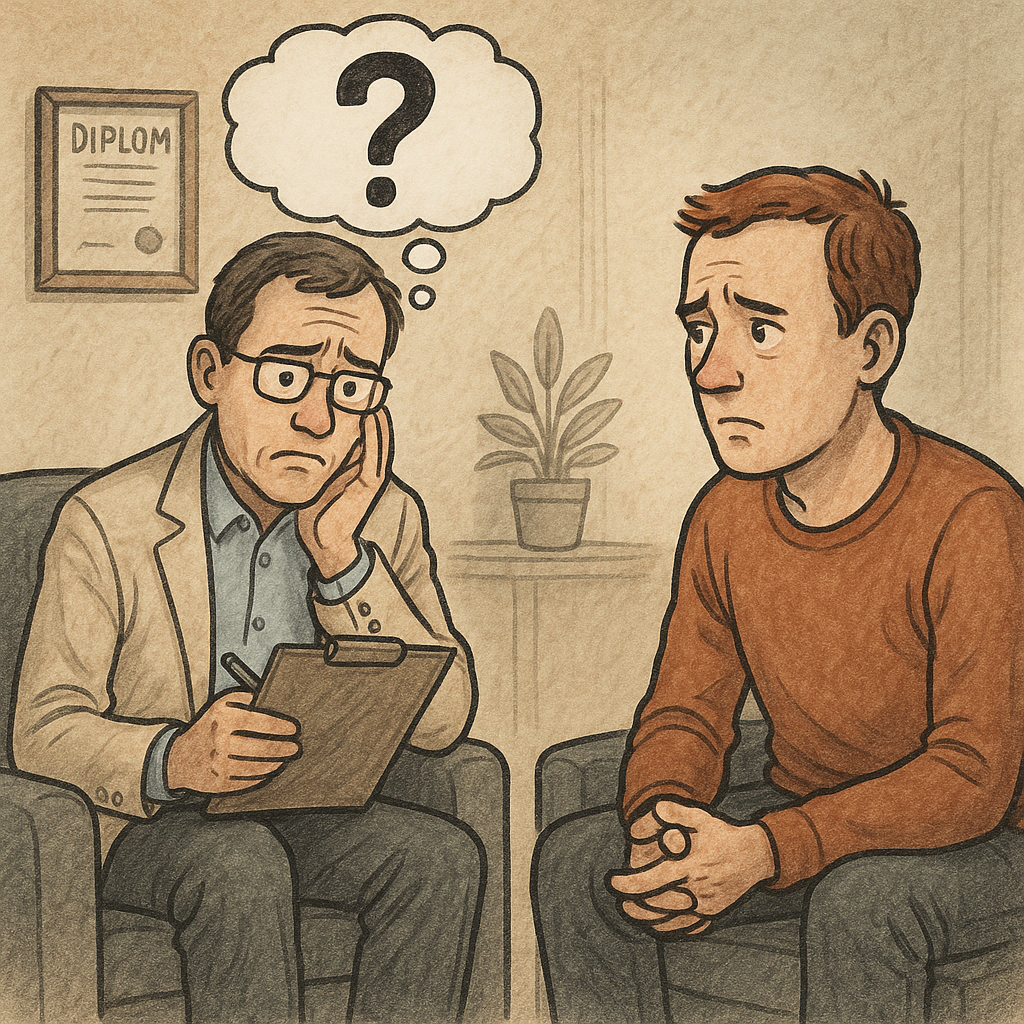
Abstract Hintergrund: Die Zuverlässigkeit psychiatrischer Diagnosen zwischen verschiedenen Beurteilern ist ein kritischer Qualitätsindikator für die diagnostische Validität. Diese Übersichtsarbeit analysiert quantitative Daten zur Interrater-Reliabilität häufiger psychiatrischer Störungen. Methodik: Systematische Literaturauswertung von Meta-Analysen, DSM-5 Field Trials und Originalstudien zu Kappa-Statistiken bei psychiatrischen Diagnosen. Ergebnisse: Die DSM-5 Field Trials zeigen ernüchternde Reliabilitätswerte für häufige Störungen. Major Depression…
-
Neurobiologische Überlappungen zwischen ADHS, Autismus und Angststörungen: Eine evidenzbasierte Übersicht
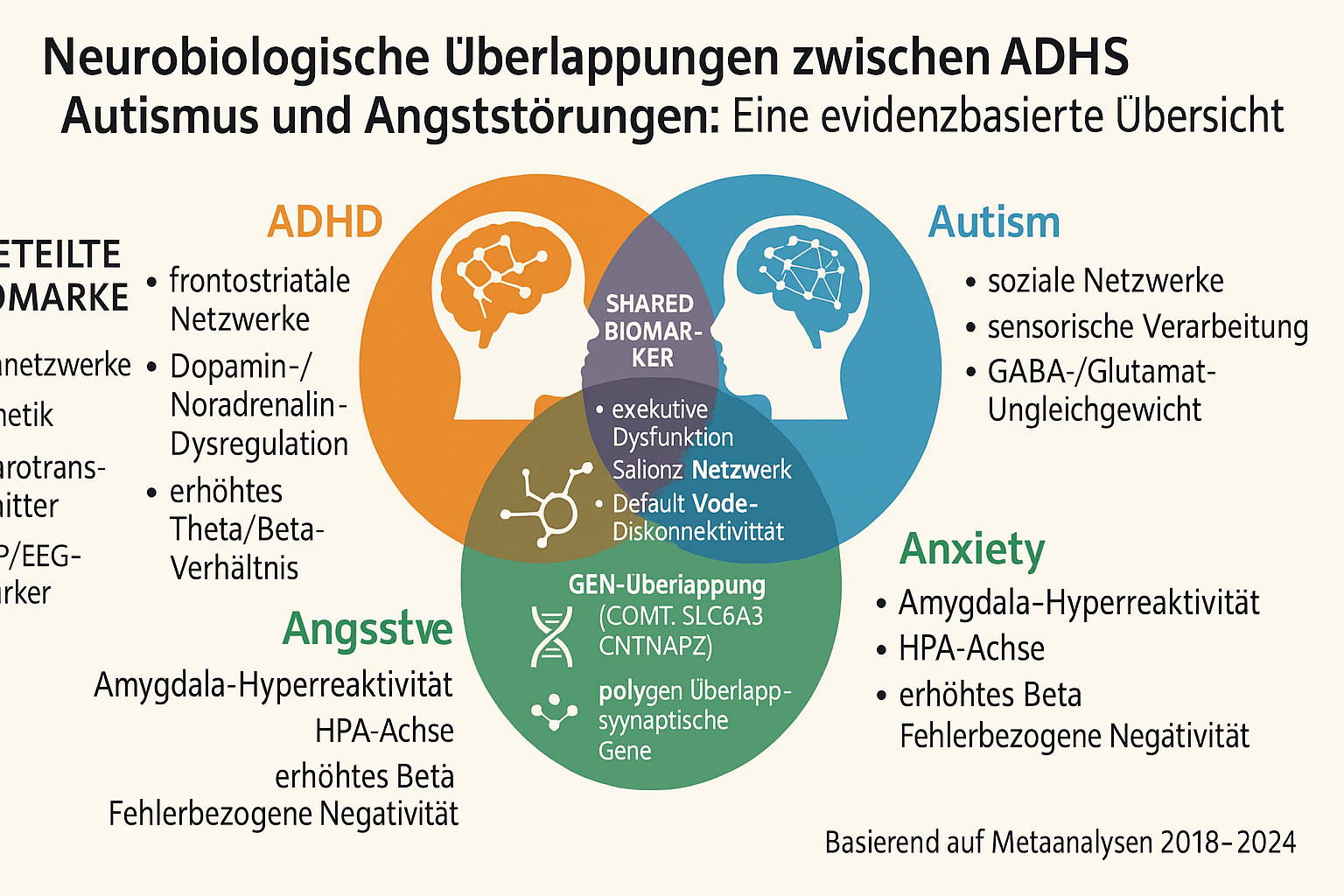
Einleitung Die diagnostischen Grenzen zwischen Aufmerksamkeitsdefizit-/ Hyperaktivitätsstörung (ADHS), Autismus-Spektrum-Störungen (ASS) und Angststörungen erweisen sich in der klinischen Praxis und Forschung zunehmend als unscharf. Diese Überlappungen stellen sowohl für die Diagnostik als auch für die Therapieplanung eine erhebliche Herausforderung dar. Der vorliegende Beitrag fasst gesicherte Erkenntnisse zu den neurobiologischen Gemeinsamkeiten und Unterschieden dieser Störungsbilder zusammen. Die…
-
Die verborgene Symphonie des Gehirns: Wie Microstates unsere Gedankenwelt orchestrieren
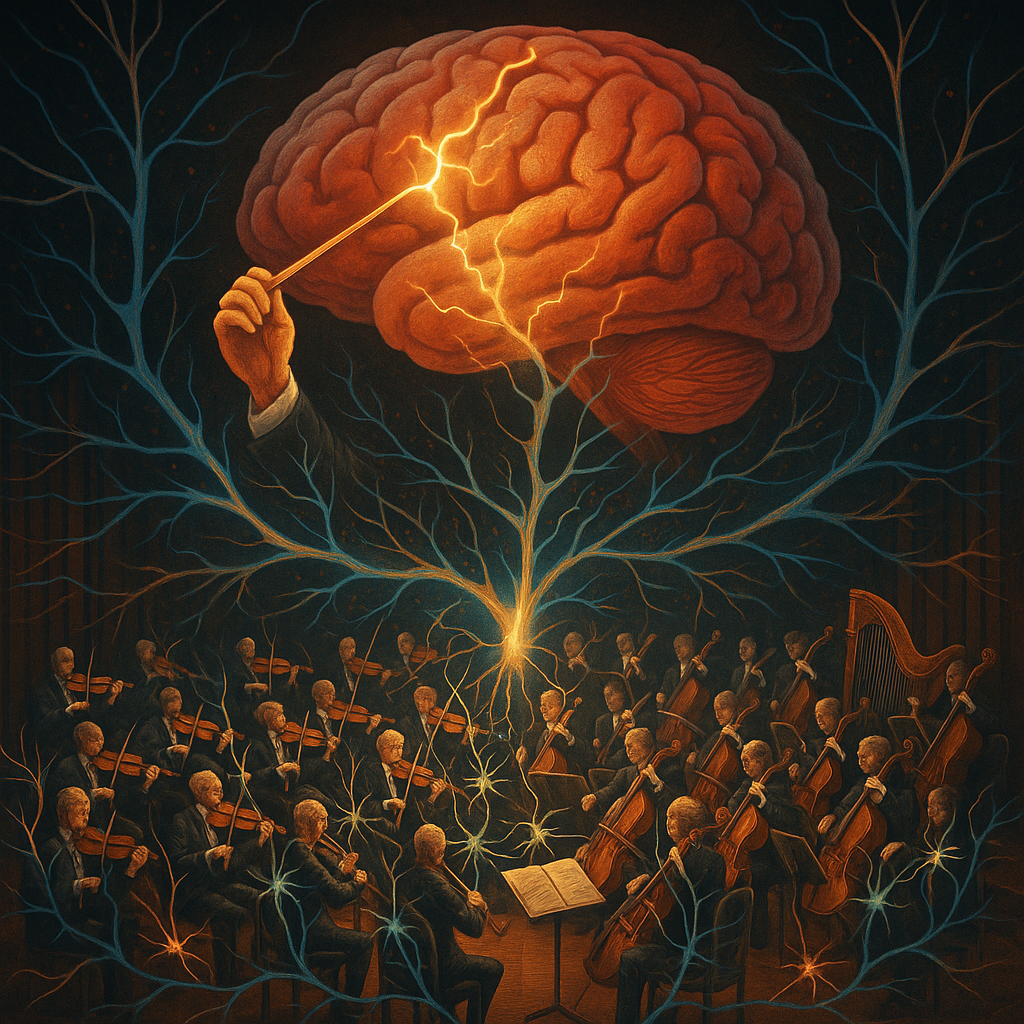
Wenn Millisekunden über unser Denken entscheiden Stellen Sie sich vor, Ihr Gehirn wäre ein gigantisches Orchester mit 86 Milliarden Musikern – den Neuronen. Doch statt einem chaotischen Durcheinander erklingt eine präzise koordinierte Symphonie. Die Dirigenten dieser neuronalen Symphonie sind winzige elektrische Muster, die nur 60 bis 120 Millisekunden andauern: die EEG-Microstates, auch als “Atome des…
-
Biomarker Workshop 2025:

Date: December 11, 2025, 9:00 a.m. to 12:30 p.m. and 1:30 p.m. to 5:30 p.m. Location: Zurich Format: Hybrid. Limited number of seats available on site/online via Zoom Cost: $150 Since 2006, the Brain and Trauma Foundation Graubünden/Switzerland (GTSG) has been committed to application-oriented research that directly benefits people, in particular through the development of…