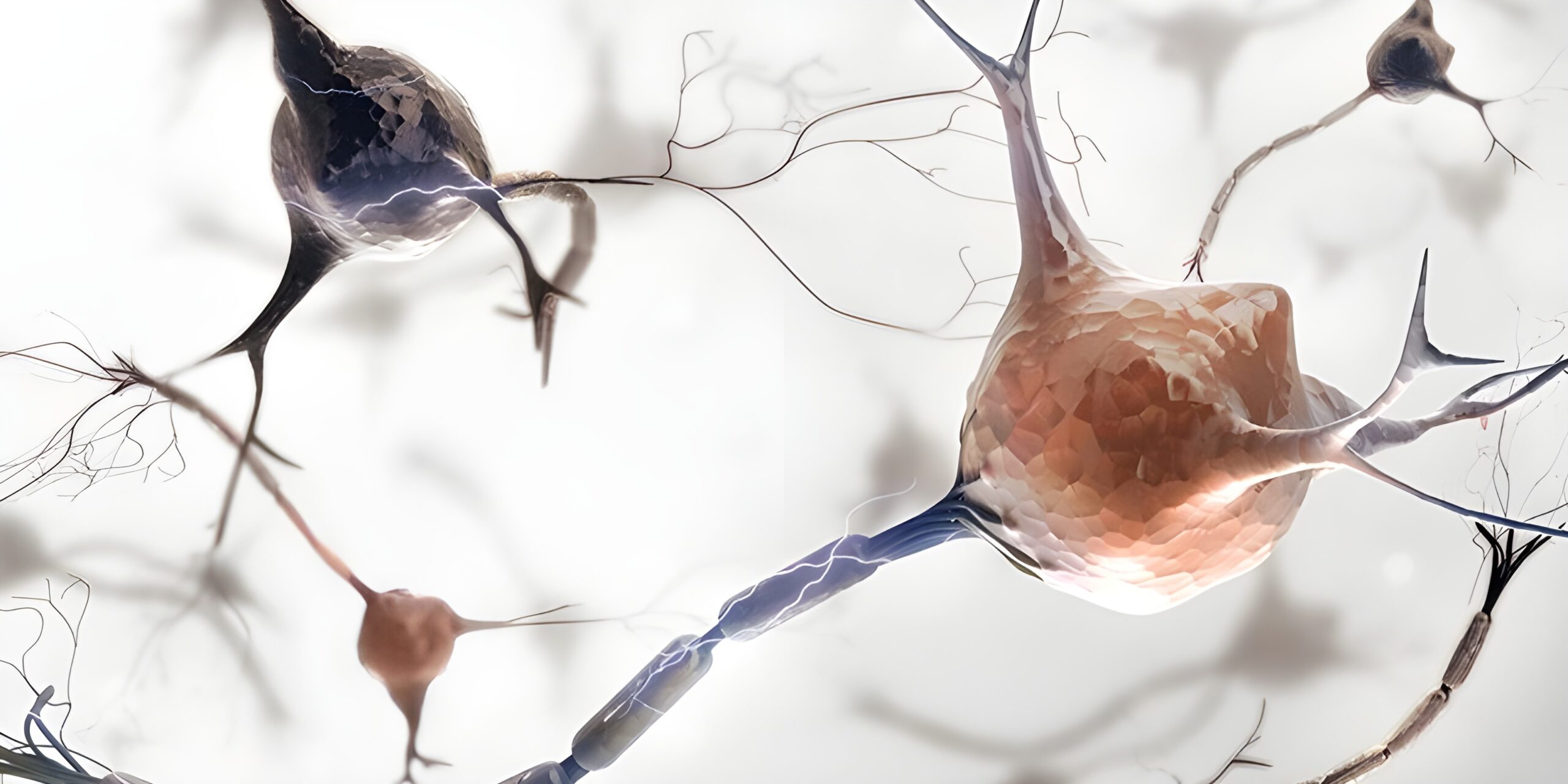
Integrating neurobiological diagnostics in child and adolescent psychiatry – a unifying approach for ADHD, autism, anxiety disorders and hypersensitivity
A bridge-builder between worlds
Dr. med. Birgit Graf, specialist in child and adolescent psychiatry and psychotherapy, embodies an approach that connects rather than divides. As medical director of BrainARC-Ostschweiz, she has for years successfully integrated the best of two worlds: the depth of clinical experience and the precision of neurophysiological measurement.

Her long-standing collaboration with the Brain and Trauma Foundation Grison since 2018 at the Chur/Landquart site shows how this integration can succeed. BrainARC-Ostschweiz, which specialises in attention and memory impairments, combines “subjective needs with objectifying insight” – an approach that allows the treatment team to see the child as a whole.
Why we need both: understanding and measuring
Child and adolescent psychiatry faces a particular challenge: symptoms such as inattention, social difficulties or anxiety can have a wide variety of causes. A 10-year-old girl who cannot concentrate at school might have ADHD – or autism with sensory overload, or an anxiety disorder, or a unique combination of different factors.
Traditional diagnostics is based on behavioural observation, conversations with children and parents, questionnaires and clinical interviews. These methods are valuable and indispensable – they capture lived experience, the degree of distress and individual strengths. But they also have their limits: different professionals can reach different assessments. The question “What is still normal, and what is already conspicuous?” often cannot be answered unambiguously.

In children, this challenge is intensified by developmental factors. What is age-appropriate, and what is already an expression of a disorder? How does one distinguish a lively temperament from ADHD? When is social reserve part of the personality, and when is it autism?
A continuum instead of pigeonholes: the diversity of neurobiological development
Modern research shows us that neurobiological differences appear on a continuum – a fluid transition from mild abnormalities to clearly pronounced traits. There is not “ADHD” versus “no ADHD”, but countless gradations in between.
Developmental variability makes rigid categorisation even more difficult: what still seems entirely age-appropriate in a 6-year-old can already point to a particularity in a 12-year-old. Every child develops at their own pace and follows their own path.

Objective biomarkers help to capture and understand this variability. Instead of sorting children into fixed pigeonholes, neurophysiological measurements allow individual profiles to be recorded – each child with their unique neurobiological signature.
Biomarker integration: uniting both perspectives
This is where Dr Graf’s approach comes in: objective biomarkers do not replace clinical expertise and empathetic conversation – they extend and deepen them. EEG-based measurements make visible what would otherwise remain hidden.
ADHD: recognising individual patterns
In ADHD, neurophysiological measurements reveal the diversity of individual patterns of brain activity. EEG connectivity analysis captures how different brain regions work together – and where there are particularities. This not only enables more differentiated diagnoses, but also an assessment of which treatment approaches might fit best.
Modern approaches use event-related potentials (ERPs) and functional connectivity. These measurements are particularly helpful in distinguishing between pure ADHD and situations in which ADHD occurs together with autism – a clinically important differentiation, as the treatment approaches differ.
In a comprehensive study with more than 3,200 participants, the ENIGMA ADHD Working Group investigated structural brain changes in ADHD and found significant reductions in subcortical volumes that were particularly pronounced in children (ENIGMA ADHD Working Group, 2023).
Autism: making the invisible visible
In autism spectrum disorders, the challenge is particularly great. Many girls and women show “hidden presentations” – they have learned to mask their autistic traits (camouflaging). Many remain undiagnosed for a long time, often with serious consequences for their mental health.
Neurophysiological biomarkers can see through this masking. Measurements of brain activity during face processing show characteristic patterns – regardless of how well someone has outwardly compensated for social skills. These objective data complement clinical observation and help to recognise hidden presentations too.

Anxiety disorders: connecting body and mind
Anxiety disorders manifest not only in thoughts and feelings, but also physically. Heart rate variability (HRV) offers a non-invasive, continuously measurable marker here. García-Rubio et al. (2017) were able to show that HRV-based approaches can provide valuable support in detecting social anxiety disorders.
This physiological measurability is particularly helpful in younger children who cannot yet put their inner states into words well. Objective data complement the subjective account and enable a more comprehensive understanding.
Hypersensitivity: the connecting element
Sensory hypersensitivity occurs frequently in ADHD, autism and anxiety disorders – often as an overlooked connecting element. The cingulate system plays a central role in processing sensory stimuli and emotional reactions.
Corinne Henzen’s contribution on transdiagnostic markers shows that hypersensitivity is not merely an accompanying symptom, but a neurobiological trait with its own significance. Objective assessment through biomarkers enables targeted support.
Understanding comorbidities instead of overlooking them
ADHD, autism and anxiety disorders frequently occur together. Many autistic children also show ADHD traits. Many struggle with anxiety. The genetic and neurobiological foundations overlap.
Traditional diagnostics can often capture these overlaps only inadequately. This is where biomarkers show their greatest added value: they help to distinguish the different facets and to recognise individual neurobiological profiles.
A practical example: a child with concentration difficulties might primarily have ADHD with accompanying anxiety symptoms – or primarily autism with ADHD-like symptoms caused by sensory overload. The neurophysiological patterns differ between these constellations. This differentiation matters therapeutically, because the support approaches differ.
Treatment: individual rather than schematic
Treatment benefits from this differentiated view. In ADHD, stimulants such as methylphenidate often work well, but children with co-occurring autism frequently respond differently to the medication. Atomoxetine is often the better alternative here – objective biomarkers help to recognise this distinction early on.
Sleep disorders in ADHD and autism often respond well to melatonin – a gentle option that improves sleep quality and thus also supports daytime functioning. The dosage is adjusted individually.
Sensory hypersensitivity is supported primarily without medication: sensory integration therapy, desensitisation training, adapting the environment. In addition, omega-3 fatty acids and optimised nutrition can be helpful.
FOKUSS: involving the family
With the FOKUSS study (family-oriented competence and strengthening of self-efficacy), the GTSG is developing a support programme for parents of children with ADHD. This holistic approach recognises that successful treatment involves the entire family system.
Parent training, competence building and strengthening self-efficacy reduce family stress and improve treatment outcomes – an evidence-based approach that combines biomarker-supported diagnostics with psychosocial family support.

The parental burden in ADHD is considerable: reduced quality of life, increased psychological strain, financial challenges and occupational limitations. FOKUSS addresses these burdens systematically and strengthens parental competence in dealing with the specific challenges.
Integration into everyday clinical practice: Dr Graf’s talk at the workshop
At the Biomarker Workshop 2025, Dr Graf will show how ADHD, ASD, anxiety and hypersensitivity can be integrated concretely into the treatment context of child and adolescent psychiatry. Her talk at 4.15 pm will address:
- Practical integration of biomarker diagnostics into everyday clinical practice
- Linking objective measurements with established treatment approaches
- Communicating findings to children, adolescents and parents
- Developing individualised support plans from biomarker profiles
- Interdisciplinary collaboration between psychiatry, psychology, paediatrics and therapy
Dr Graf will present concrete case examples showing how biomarkers turn diagnostic uncertainty into well-founded clarity – and how this clarity leads to more suitable support.
The future: integration rather than replacement
The vision is clear: a child and adolescent psychiatry that integrates subjective experience and objective measurement on an equal footing. Biomarkers do not replace clinical expertise and the therapeutic relationship – they enrich them.
Dr Graf’s work shows that when professionals no longer have to devote a large part of their cognitive capacity to diagnostic uncertainty, room is created for genuine therapeutic presence. The certainty of complementary objective data builds trust among parents and patients. And differentiated profiles make individually tailored support possible.
The next generation of child and adolescent psychiatry will use dimensional perspectives that do justice to individual neurobiological characteristics. Early detection through biomarkers will help to identify children at increased risk in good time. Continuous monitoring will make developmental trajectories visible.
This future is already growing today – in practices such as BrainARC-Ostschweiz and through committed professionals such as Dr Birgit Graf, who build bridges between the measurable and the experienced, between science and human encounter.
References
ENIGMA ADHD Working Group. (2023). Subcortical brain volumes in ADHD: Largest ever study with 3,242 participants. Molecular Psychiatry, 28(4), 1456-1467.
García-Rubio, C., Sancristóbal, M., García-Martínez, B., et al. (2017). Heart rate variability analysis for social anxiety detection. IEEE Access, 5, 18417-18426.
Goldsmith, D. R., Rapaport, M. H., & Miller, B. J. (2016). A meta-analysis of blood cytokine network alterations in psychiatric patients. Molecular Psychiatry, 21(12), 1696-1709.
Winter, N. R., Leenings, R., Ernsting, J., et al. (2024). Quantifying deviations of brain structure and function in major depressive disorder across neuroimaging modalities. JAMA Psychiatry, 81(1), 48-58.
Biomarker Workshop 2025: experience the integration
ADHD-AUTISM-ANXIETY-SENSITIVITY: spectrum or comorbidity?
A complementary biological perspective extends diagnostics and treatment
Thursday, 11 December 2025 | 9.00 am–5.30 pm
Paulus Akademie, Zurich (hybrid)
International experts demonstrate the practical integration of neurobiological biomarkers:
- Tony Attwood/Michelle Garnett: Beyond the Stereotypes (10:00)
- Nicole Chou: PDA – Pathological Demand Avoidance (11:30)
- Silvana Markovska/Alexander Tenev: Neurophysiological Recognition in Clinical Practice (13:30)
- Matthias Huber: Between worlds: understanding therapy from within (14:15)
- Corinne Henzen: The cingulate system and hypersensitivity as transdiagnostic markers (15:30)
- Dr. Birgit Graf: Integration into the treatment context of child and adolescent psychiatry (16:15)
Price: CHF 150.– | Credits: 7
Experience how scientific findings are combined with clinical experience – for more comprehensive diagnostics and individually tailored support.
Dr. med. Birgit Graf
Specialist in child and adolescent psychiatry and psychotherapy
Medical Director BrainARC-Ostschweiz
Brain and Trauma Foundation Grison