-
What does normal mean here? Why a single measurement says nothing without a comparison group
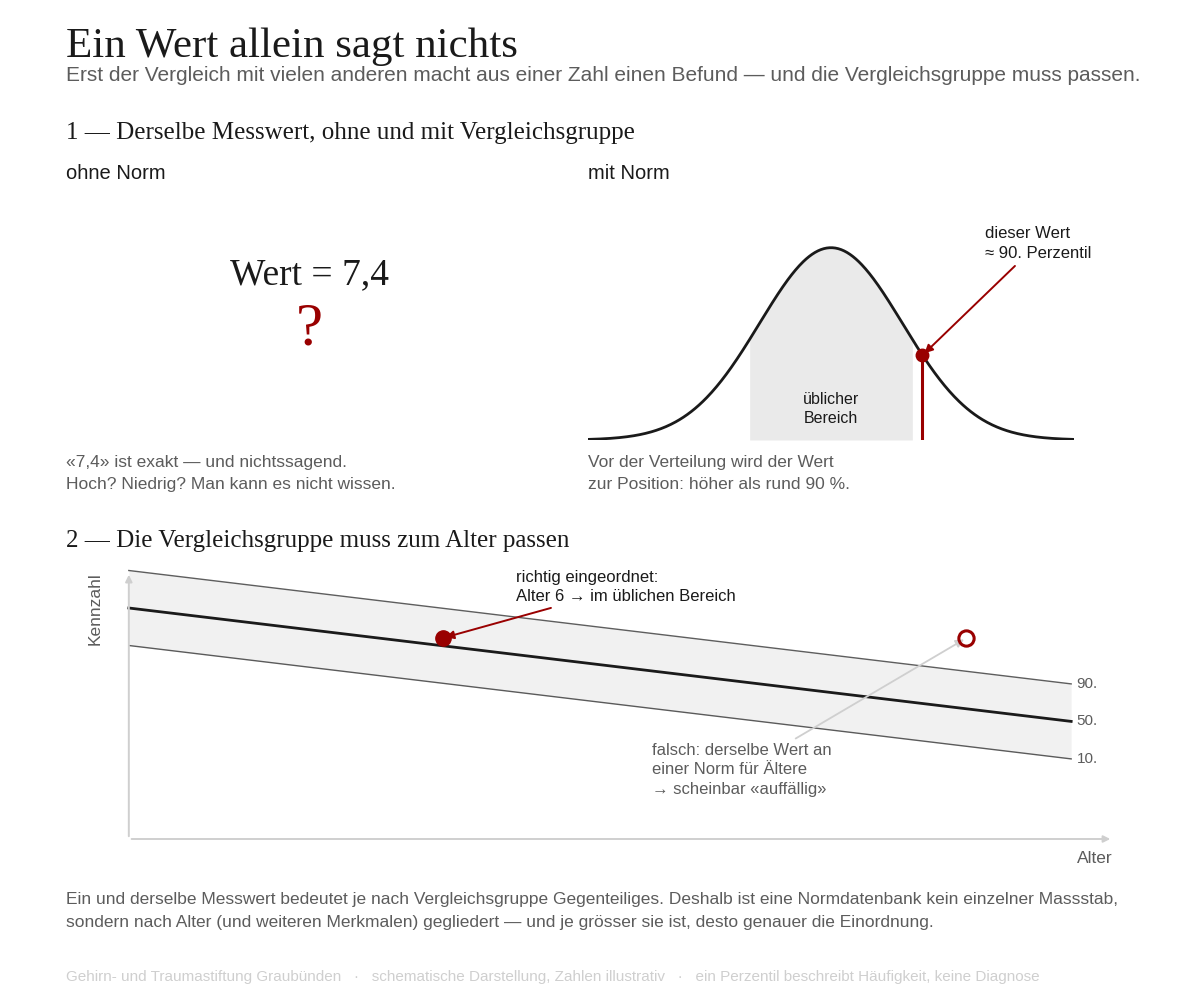
Imagine someone tells you: «The child is 108 centimetres tall.» Is that a lot? A little? Cause for concern? The question cannot be answered. Not because the number is imprecise — it is perfectly exact — but because the decisive part is missing: a comparison. Only the follow-up question «how old is the child?» turns…
-
Making trauma measurable? What brain function analysis can do in PTSD — and what it cannot

Why PTSD is so hard to pin down Of the four themes the Biomarker Workshop circles around in December — ADHD, autism, PTSD and sensitivity — post-traumatic stress disorder is the most awkward when it comes to measurement. With ADHD and autism we are looking at development that takes a different course. With PTSD we…
-
Biomarker Workshop 2026: Sensitivity and Stress in ADHD, Autism and PTSD
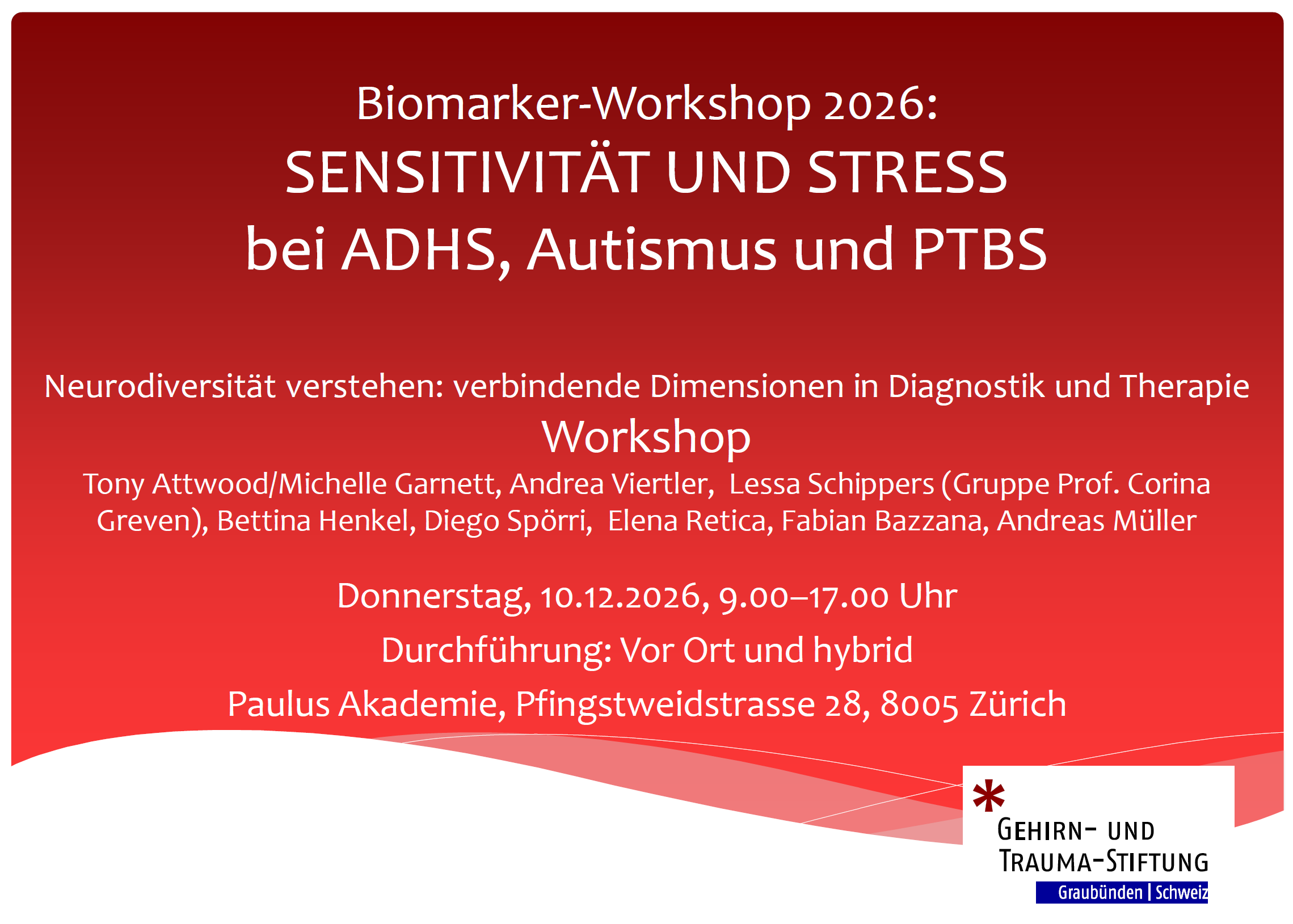
ADHD, autism and PTSD are listed as separate diagnoses. Clinically and neurobiologically, however, they overlap considerably. The 2026 workshop examines the proposition that two dimensions lie beneath these diagnoses: sensitivity — how much a nervous system takes in from its environment and amplifies — and stress — what that intake costs the system. All three…
-
ADHD in the Spectrum of Neurodiversity. New Paths: Understand First, Then Treat
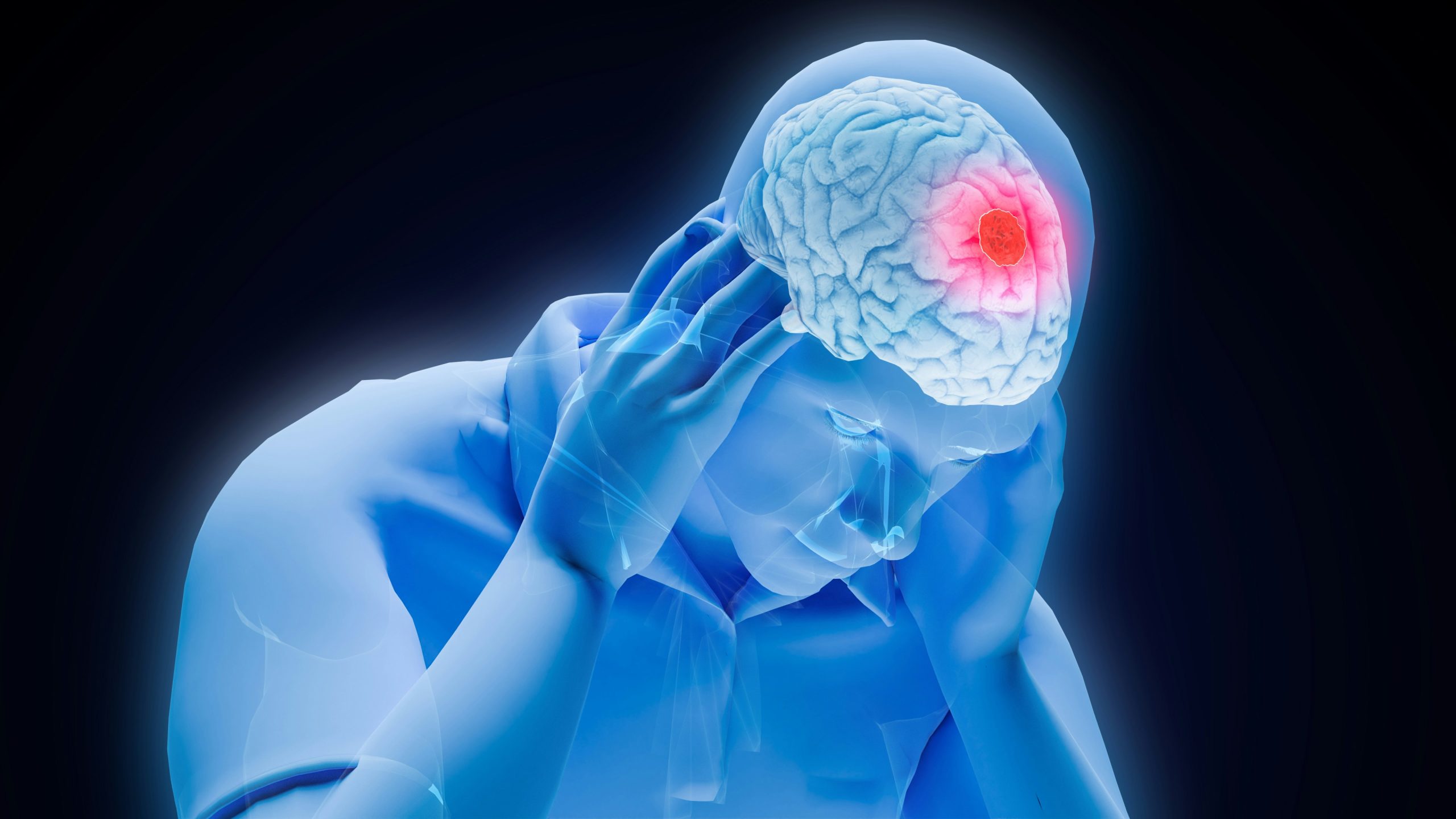
Same diagnosis, very different brains: on 8 October 2026, 16:00–18:00, Andreas Müller will show at the Logosynthese Institut Schweiz in Bad Ragaz how brain function analysis makes ADHD understandable within the spectrum of neurodiversity, and how this leads to personalised treatment. Talk by Dr. phil. Andreas MüllerThursday, 8 October 2026, 16:00–18:00Logosynthese Institut Schweiz, Bahnhofstrasse 38,…
-
Workshop in the Canton of Ticino

[2026/09/10], 11:15 – Understanding the brain before intervening: a scientific and automated approach to the analysis of EEG, ERP and microstates Speakers: Dr. phil. Andreas Müller, psychologist, specialist in psychotherapy FSP, head of BrainARC-Ostschweiz and HBImed. For many years he has worked in neuroscience, quantitative EEG (qEEG) assessment, and evidence-based diagnosis and treatment. Fabian Bazzana,…
-
The Dimension Beneath the Diagnoses
Sensitivity as the common denominator of ADHD, autism and PTSD — an overview of the concept, the evidence and the diagnostic consequences 1. Why the question arises Anyone who spends enough time assessing people with ADHD, with an autism spectrum disorder and with post-traumatic stress disorder makes an observation that appears in no diagnostic manual:…
-
HBImed apps explained live: online session on 5 October 2026

Note: This session has already taken place. Monday, 5 October 2026, 6:00–7:00 p.m. (CEST) – online via Zoom, about one hour. The Brain and Trauma Foundation Graubünden presents the two HBImed apps: the questionnaire app and the tracker app. Participation is free of charge. Diagnostics and follow-up depend on data that is collected in a…
-
Autism assessment: the lost year
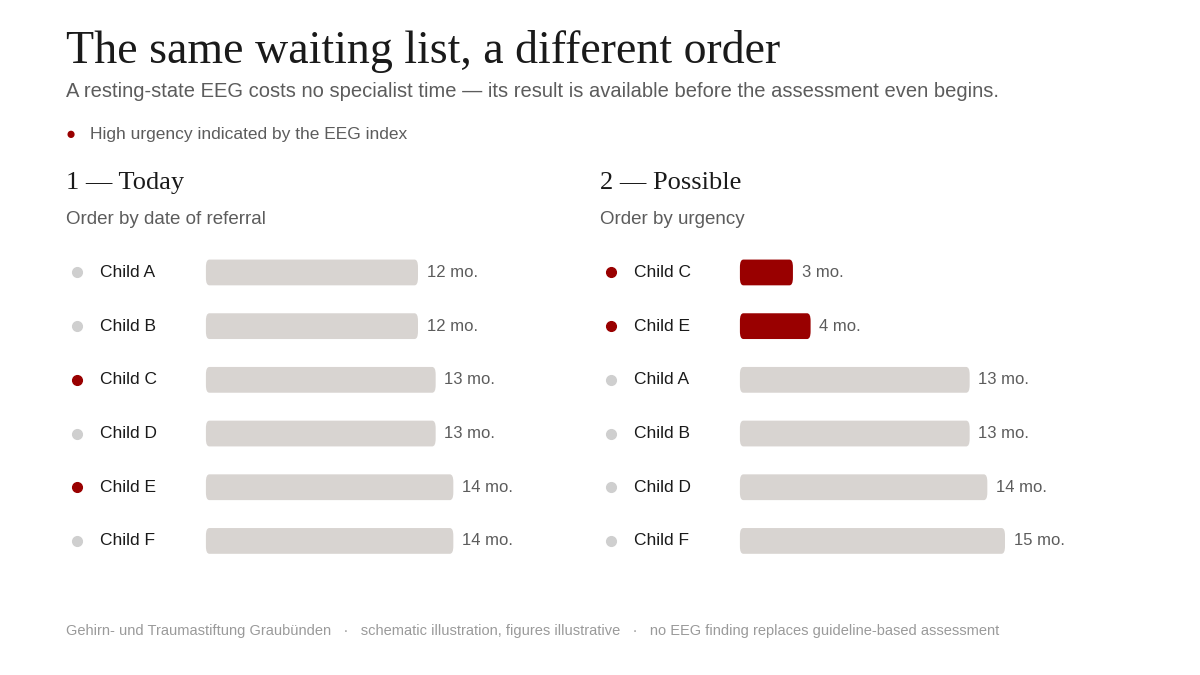
Why autism assessment is reaching its limits — and what measurable brain signals can contribute Parents notice something. The child is three, perhaps four years old, and something is unfolding differently than with the siblings or the other children at playgroup. They speak to their paediatrician, they receive a referral — and then they wait.…
-
High sensitivity and vigilance: the myth of the permanent alarm

A new bachelor’s thesis at the ZHAW is the first to test whether high sensitivity shows up in the event-related potentials of the EEG. The result sits poorly with the widespread image of a permanently over-aroused nervous system – and puts a different quantity at the centre instead: vigilance. The picture of a permanent alarm…
-
Biomarker Workshop 2025: ADHD-Autism-Anxiety-Hypersensitivity

Programme – Biomarker Workshop 2025 9:00 Welcome: Andreas Müller 9:15 A. Müller: “From Vision to Reality: Practical Biomarker Applications in ADHD, Autism, Anxiety and Sensory Sensitivity” Slides 10:00: Attwood/Garnet: Beyond the Stereotypes: Biomarkers for the Hidden Presentations of Autism, ADHD, and Anxiety – Insights from 80 Years of Clinical Practice” Handout See also…
-
HBImed Therapy Tracking: making the course of therapy visible

A single appointment only ever shows one moment in time. How a patient is doing between sessions often stays invisible – and decisions then rest on memory rather than data. This is exactly where HBImed Therapy Tracking comes in: the tool accompanies patients between appointments and turns individual snapshots into a picture of their development. Developed…
-
The HBImed Questionnaire App: 50 clinical questionnaires, digital and automatically scored

Clinical questionnaires are part of everyday life in many practices – yet sending them out, collecting them and scoring them on paper costs time and is prone to error. The HBImed Questionnaire App maps this entire workflow digitally: from inviting the patient to the finished, scored result. It was developed by the GTSG (Brain and…
-
Differentiating the use of methylphenidate and amphetamines in ADHD

A scientific analysis with particular reference to EEG, ERP and microstate biomarkers Summary Attention deficit hyperactivity disorder (ADHD) is one of the most common neurodevelopmental disorders, affecting around 5% of children and 2.5% of adults worldwide. Psychostimulants, in particular methylphenidate (MPH) and amphetamines (AMP), represent the first-line pharmacological treatment. Although both classes of substances increase…
-
ADHD, autism spectrum disorder and sleep problems: a systematic review of comorbidities, neurobiological mechanisms and evidence-based treatment approaches

Abstract Attention-deficit/hyperactivity disorder (ADHD), autism spectrum disorder (ASD), anxiety disorders and sleep disorders show high rates of comorbidity with complex bidirectional relationships. This systematic review analyses current research findings on prevalence, neurobiological mechanisms and evidence-based treatment approaches. More than 80% of people with ASD experience sleep problems, while 28% additionally meet criteria for ADHD. Anxiety…
-
Why the EEG interpretation course is your next step.

The Biomarker Workshop 2025 showed what is possible. 250 participants experienced how international experts—led by Tony Attwood and Michelle Garnett—outlined the future of psychiatric diagnostics. But between knowing what is possible and applying it on a daily basis lies a crucial step: practical competence. This is exactly where the EEG interpretation course comes in. The…
-
Evolutionary archetypes of neurodiversity

ADHD – Autism – Anxiety – Hypersensitivity – PDA Brain and Trauma Foundation Grison (GTSG) Supplementary material for the Biomarker Workshop 2025 | 11 December 2025, Zurich Introduction: from pathology to an evolutionary perspective Modern neuroscience is beginning to understand that many conditions classified as “disorders” may have evolutionary origins. As Yuval Noah Harari describes…
-
Therapy and support in AuDHD – the neurodiversity approach

Part 5 of the article series on the Biomarker Workshop 2025 The treatment of people with autism and/or ADHD has changed fundamentally in recent years. Away from fighting symptoms, towards a holistic approach that understands neurodiversity as a natural variation of human neurology. The new paradigm: acceptance instead of normalisation Attwood and Garnett describe a…