Part 2 of the article series on the Biomarker Workshop 2025
ADHD in girls and women often goes unrecognised for years. Unlike boys, who more often stand out through hyperactive and impulsive behaviour, girls show subtler symptoms – and are therefore systematically overlooked.
Early signs: the daily struggle begins
According to Attwood and Garnett, many girls with ADHD already know by the age of five that they are “different”. What follows is an exhausting everyday life:
- Enormous intellectual effort to hide and compensate for problems
- A daily struggle to conceal an inner chaos
- Constant fear of losing control over emotions and energy levels
Why girls slip through the net
Research by Quinn and Madhoo (2014) shows a paradoxical pattern: girls with ADHD have fewer visible symptoms but the same impairments as boys.
This leads to systematic underdiagnosis:
- They fall behind and fail in peer relationships – without causing problems for anyone but themselves
- They tend to blame themselves
- Teachers and professionals often overlook them
- They frequently present with internalising disorders (anxiety, depression) and compensatory strategies such as perfectionism
The social dilemma
Girls and women with ADHD struggle particularly with social relationships:
- Difficulty regulating energy levels
- Problems with building and maintaining peer relationships
- Fewer friendships and more volatile situations with arguments and conflicts
- The desperate wish to be able to behave differently
The risks: more than just inattention
The consequences of unrecognised ADHD can be serious:
- Greater risk-taking than peers
- Earlier experimentation with sexuality and substances
- A growing sense of loneliness and emptiness
- A feeling of restlessness and emptiness that spreads whenever nothing is constantly capturing attention
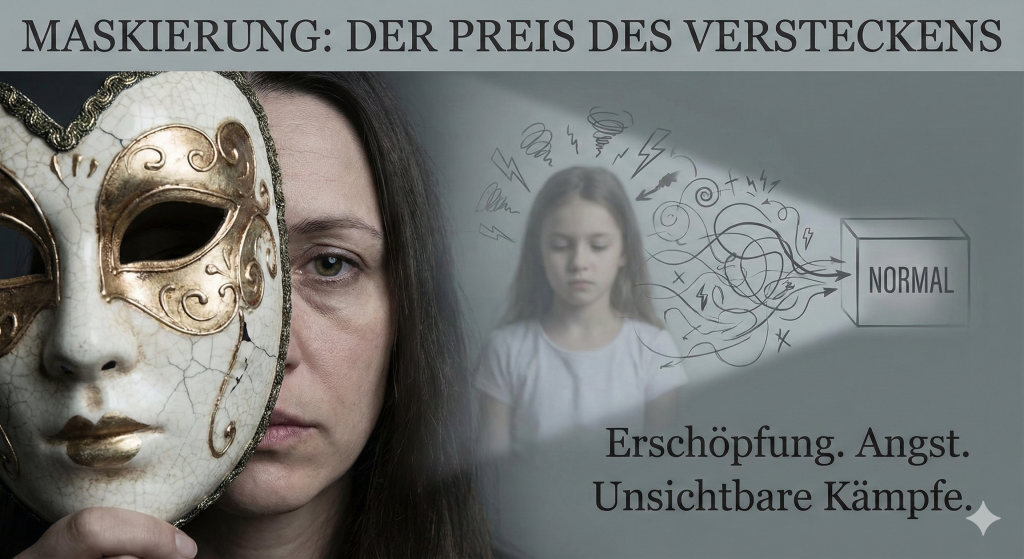
Masking: the price of hiding
Women and girls with ADHD invest enormous energy in masking and camouflaging their symptoms. They learn early on:
- To suppress their impulsivity
- To hide their inner restlessness from the outside world
- To develop strategies for appearing “normal”
This process is exhausting and can lead to secondary mental health problems – from anxiety disorders and depression to eating disorders.
What can we do?
Recognising that ADHD looks different in women is the first step. Professionals should:
- Ask specifically about internalising symptoms
- Recognise compensatory strategies and perfectionism as possible warning signs
- Take family history into account (ADHD has a strong genetic component)
- Consider objective biomarkers as a complementary diagnostic tool
Find out more at the Biomarker Workshop 2025
On 11 December 2025, Prof. Tony Attwood and Dr Michelle Garnett will share insights from 80 years of combined clinical practice at the Biomarker Workshop in Zurich.
Source: handout “Understanding Autism and ADHD” by Prof. Tony Attwood & Dr Michelle Garnett, 2025