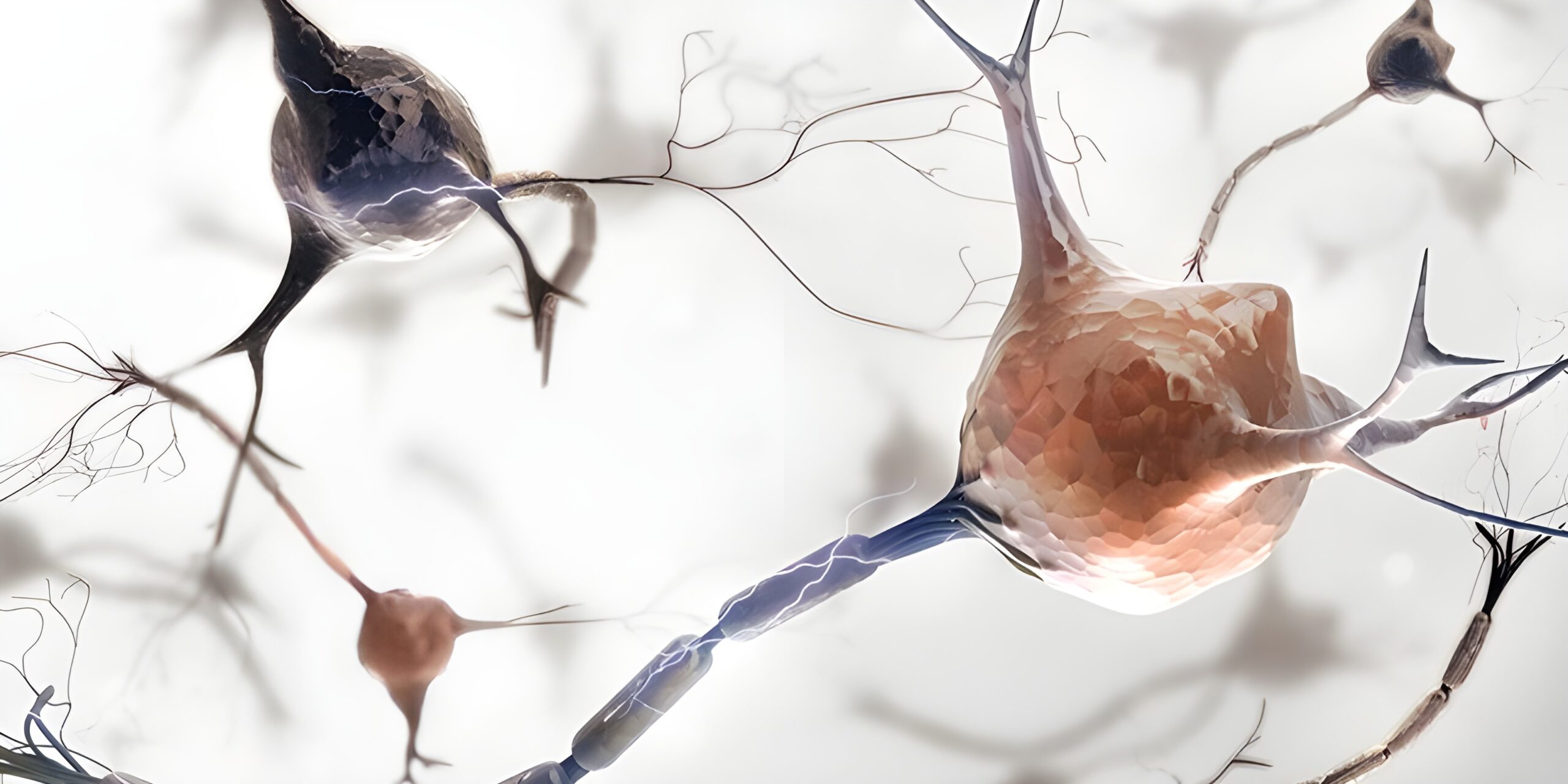
The bridge-builder who understands both sides
Whenever Matthias Huber leaves his house, he always carries a cap, noise-cancelling headphones and sunglasses. Not for reasons of fashion, but as a shield against a world that is often overwhelming for him. Stimuli that other people barely notice can feel like electric shocks to the 56-year-old psychologist. Matthias Huber lives with Asperger’s syndrome – and it is precisely this lived experience that makes him one of the most important bridge-builders between the neurotypical and the autistic world.
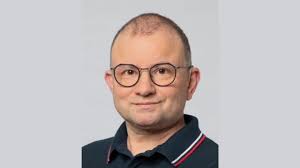
On 11 December 2025, Huber will speak at the 15th Biomarker Workshop of the Brain and Trauma Foundation Grison in Zurich. His talk “Between worlds: understanding therapy from within” promises insights that only someone who knows both perspectives can offer: that of the person affected and that of the professional.
A diagnosis as a turning point
As a child, Matthias Huber was extremely withdrawn. Although he could speak in full sentences by the age of two, he hardly made use of his language skills. Only at the age of 27 did he receive a diagnosis of Asperger’s syndrome – a moment of relief and understanding. Suddenly, years of difficulties made sense: the sensory overload, the social exhaustion, the need for strict routines.
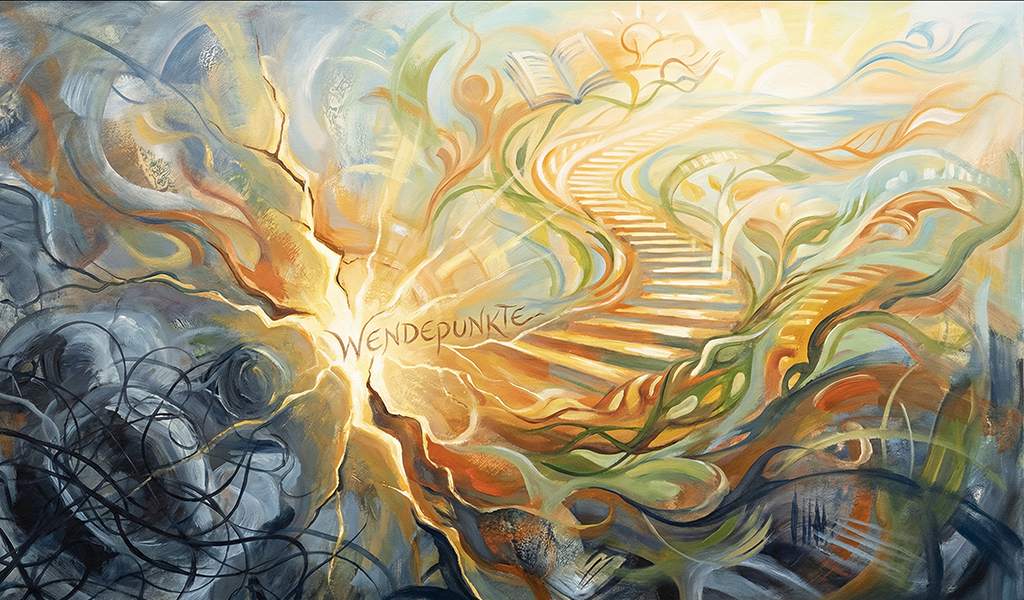
But instead of withdrawing, Huber chose a remarkable path: as a mature student, he studied education and psychology at the University of Zurich. During his studies he received a scholarship for highly gifted people with physical and sensory disabilities, so that he could concentrate fully on his studies. After his licentiate, he completed further training in cognitive behavioural therapy in 2009.
More than 20 years of clinical expertise
From 2005, Huber worked at the University Psychiatric Services (UPD) Bern, from 2019 as senior psychologist, where he played a key role in building up autism diagnostics and therapy. Since 2023 he has worked at the Stiftung Kind & Autismus in Urdorf, where he heads autism diagnostics and counselling. His work includes the assessment and treatment of autistic children and adolescents as well as parent counselling.
Huber’s therapeutic approach is characterised by exceptional precision. While many therapists work with open questions (“How do you feel?”), Huber asks highly precise alternative questions: “When you practise the guitar, do you look at the strings, or straight ahead, or at a place I haven’t mentioned?” This precision enables autistic children to articulate their inner world. Parents regularly report: “Our child says you understand them.”
Reversing the perspective: neurotypicals under the magnifying glass
In his publications and talks – whether at the Swiss Congress for Adlerian Psychology, at the autism conference days in Ravensburg, at workshops in Berlin or at the Bavarian state association in Rosenheim – Huber consistently reverses the usual perspective. Instead of only analysing autistic people, he also turns his gaze to “neurotypicals”. From this perspective, what is often described as a “deficit” of autistic people turns out to be a different, equally valid way of perceiving and processing information.
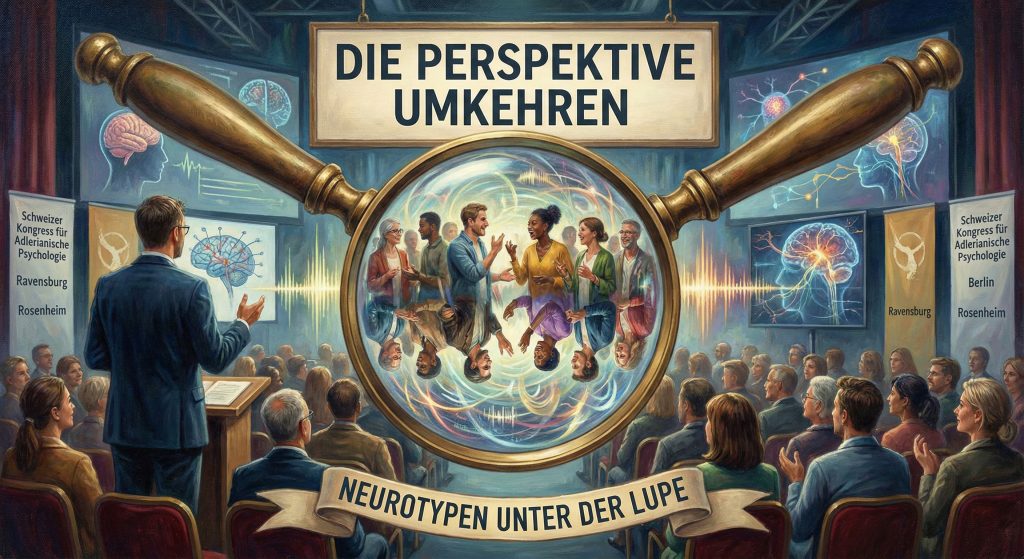
This attitude shapes his entire therapeutic work: “I see autism as a disability and a gift at the same time.” The goal is not normalisation, but understanding and mutual adaptation. “It is not only we who are affected by ASD who have to adapt to society. Society should also become open to people who are different.”
The bridge to objective biomarkers
This attitude corresponds perfectly with the approach of the Brain and Trauma Foundation Grison. Integrating objective biomarkers into psychiatric diagnostics serves not to pathologise, but to value neurodiverse ways of functioning.
While other workshop speakers present objective neurobiological markers – EEG patterns, event-related potentials, genetic correlations – Huber will show what these measurements mean for lived life. He can explain from the inside what it means when EEG data show increased sensory sensitivity, when event-related potentials indicate altered processing speeds, or when connectivity patterns point to different neural networks.
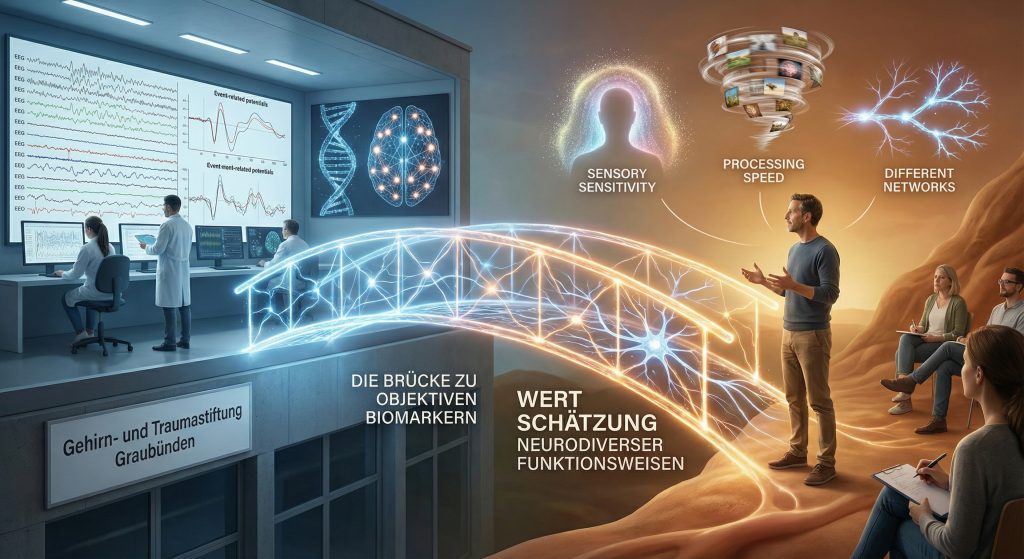
This combination is rare: many people affected share their experiences, but few also have therapeutic training and more than 20 years of clinical practice. Conversely, many therapists have excellent training but lack direct experience of autistic perception. Huber combines both – and thereby demonstrates that autism need not be an obstacle to a successful academic and professional career.
What participants can expect
Matthias Huber’s talk will offer practical insights into: precise communication strategies for therapeutic work with autistic children and adolescents, sensory support options in clinics and practices, gender-specific aspects (particularly important given that 80% of autistic women remain undiagnosed by the age of 18), and integrating the inside perspective into evidence-based treatment approaches.
His contribution shows that when we understand how the autistic brain works – measurably, quantifiably, objectively – we can better support autistic people. Not through normalisation, but through understanding and mutual adaptation.
Biomarker Workshop 2025: ADHD-Autism-Anxiety-Sensitivity
Thursday, 11 December 2025, 9.00 am–5.30 pm
Paulus Akademie, Zurich (hybrid format)
With international experts: Tony Attwood/Michelle Garnett, Nicole Chou, Silvana Markovska, Alexander Tenev, Matthias Huber, Corinne Henzen, Birgit Graf and Andreas Müller.
Brain and Trauma Foundation Grison
Phone: +41 81 322 2828