Imagine a child who desperately wants to go to school but cannot. Who loves their family and wants to hug them, but freezes when touched in a way they have not chosen. Who knows exactly how to put on shoes, but whose body refuses to carry out this simple action. What at first glance looks like defiance, refusal or difficult behaviour is increasingly understood by leading autism experts – including, for example, Tony Attwood – as the expression of a specific autism profile. Pathological Demand Avoidance Syndrome (PDA) is characterised by extreme, anxiety-driven avoidance of demands. Its place within the autism spectrum is so far not considered scientifically established and remains the subject of intense debate.
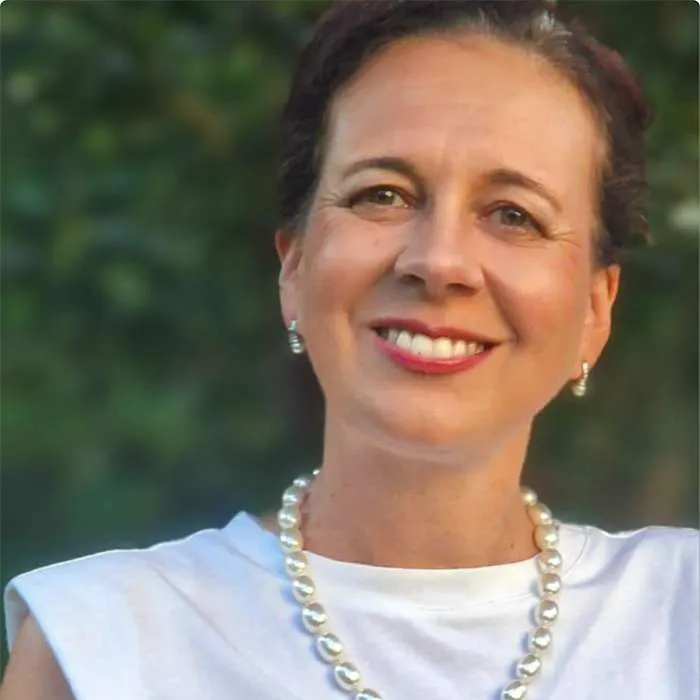
At the Biomarker Workshop 2025, which takes place in Zurich on 11 December, Dr. med. Nicole Chou-Knecht will shed light on this often misunderstood phenomenon. The leading PDA expert in the German-speaking world will show why understanding the neurobiological foundations is crucial for adequate support and how professionals, parents and those affected can all benefit from this knowledge.
What PDA means and why it is so often overlooked
The abbreviation PDA stands for Pathological Demand Avoidance and describes a behavioural profile within the autism spectrum that is characterised by intense, uncontrollable avoidance of demands. The term was coined in the 1980s by the British psychologist Elizabeth Newson and has in recent years also been attracting increasing attention in the German-speaking world.
Clinical evidence suggests that PDA differs from ordinary defiant or oppositional behaviour, as it is better regarded as the expression of a neurobiologically rooted particularity than as a parenting problem.

Pathological Demand Avoidance (PDA)
Autonomie und Gleichwertigkeit als Grundpfeiler einer inklusiven PDA-spezifischen Förderung
Authors
Nicole Agathe Chou-Knecht Praxis Tannheim
Regine Götz Praxis Sofa to Share
DOI: https://doi.org/10.57161/z2025-05-05
People with PDA show resistance to everyday demands that goes far beyond age-typical defiance and is not tied to particular phases of child development. This resistance affects even the simplest activities such as getting dressed, eating or brushing teeth – and the tragic part is that even demands the person wants to meet and would like to fulfil cannot be carried out. It is as if the body itself sounds the alarm and refuses any cooperation, even though the mind wants something quite different.
To get around demands, those affected use a wide range of strategies. They distract, procrastinate, refuse, play roles or skilfully manipulate social situations. They come up with complicated excuses, complain of physical symptoms or claim the task is too difficult or not understood. Some pass the task on to others or take control themselves by starting to hand out instructions. If these chosen strategies do not work, if the person feels cornered or pressure is applied, a rapid escalation can occur – up to panic reactions, running away, locking themselves in, aggression, meltdowns with screaming and rage, shutdowns or self-injury.
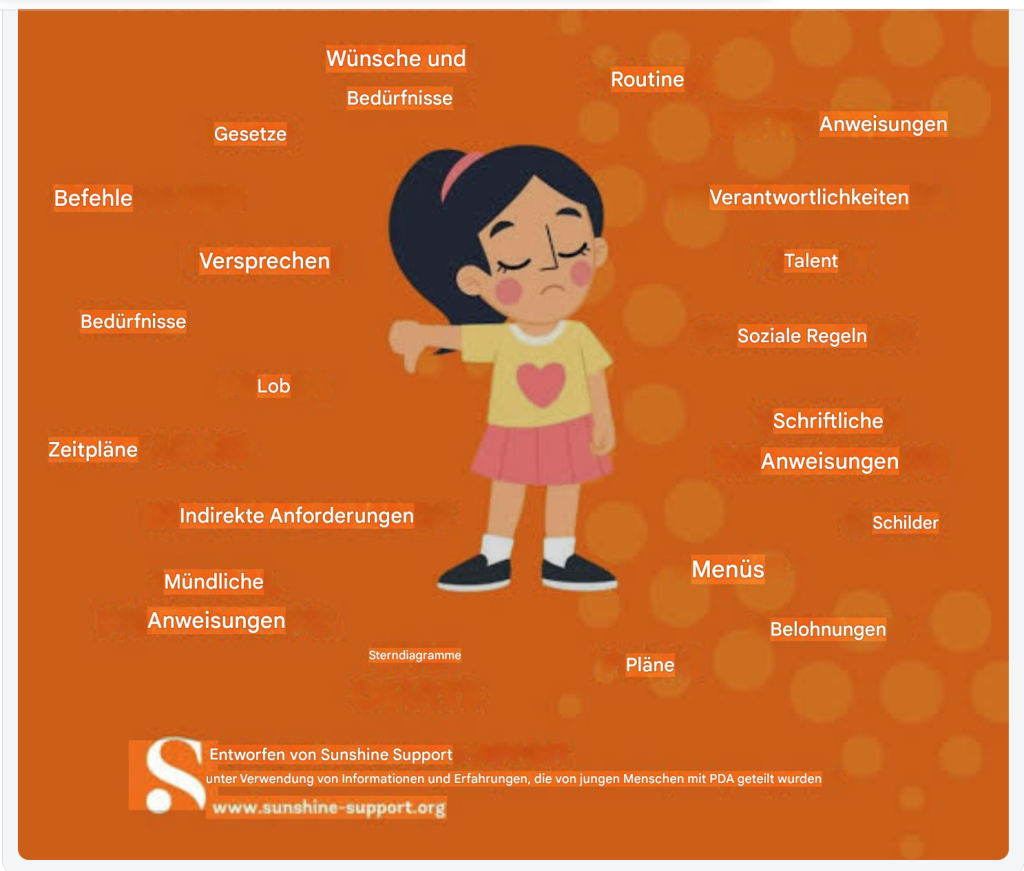
Behind all this behaviour lies an extreme need for control. Demands from outside are perceived as a loss of control, which triggers massive stress reactions. It is crucial to understand, however, that this resistance is not motivated by malice but by irrational yet overwhelming anxiety. This is exactly where PDA differs fundamentally from similar behaviours in other conditions such as conduct disorder.
What makes diagnosis even more difficult is the fact that people with PDA often appear, on the surface, to have good social skills. They have good verbal fluency that disguises their actual difficulties. They can engage in role play and are masters of so-called masking – hiding their difficulties from those around them. This masking, however, is extremely draining and can lead to massive breakdowns, which then often take place in the safe environment of the family. Social hierarchies are often not understood or accepted by people with PDA. They want to act on an equal footing with adults, want to be co-teachers or co-parents, which frequently leads to conflicts in the traditional parenting and school system.
The neurobiological foundations: why PDA is not a behavioural disorder
Dr Chou emphasises that her clinical experience with PDA points to an underlying neurodivergence that clearly distinguishes PDA from oppositional defiant behaviour. While the behavioural features of PDA and oppositional defiant behaviour may look similar from the outside, they are therefore based on different neurobiological foundations.
The autonomic nervous system of people with PDA reacts to demands with extreme over-arousal. The nervous system becomes flooded with stimuli, leading to uncontrollable physiological reactions. The body switches into fight-flight-freeze mode, resulting in overloads and shutdowns. What looks like aggressive behaviour from the outside is in truth an expression of panic, not aggression. The brain interprets the demand as an existential threat, and the body reacts accordingly.
In addition, people with PDA show impaired cognitive empathy with preserved affective empathy. This means they have difficulty spontaneously taking social perspectives and grasping the overall context of social situations. They think concretely and have problems with contextualisation. When the feelings of others are explained to them, however, they can certainly empathise affectively. So it is not that they lack empathy – they simply find it hard to develop it spontaneously and without explanation.
Dr Chou-Knecht has developed a comprehensive neurobiological concept that integrates different levels of explanation. This integrative conceptualisation model includes neurophysiological dysregulation, autonomic over-activation in response to demands, anxiety-driven need for control and limited executive functions. It outlines an explanatory approach in which PDA is not an isolated behaviour but the result of complex neurobiological processes that interlock and can reinforce one another.
It is now known that even conduct disorder involves neurobiological particularities. However, these do not appear to resemble autistic patterns to the same extent as in the PDA profile. This distinction is central, because it has direct consequences for the type of support and intervention.
The diagnostic challenge: falling between the cracks
People with PDA frequently slip through the net of standard autism diagnostics. The reason lies in their atypical presentation. They appear superficially sociable and therefore do not fit the classic picture of autism that many professionals have in mind. Their social motivation and their ability to role-play make them seem less “autistic”. They have changing special interests and show less obvious routines and repetitive behaviours, so that the diagnostic criteria for autism do not appear to be clearly met.
The extreme masking that people with PDA are capable of further intensifies the diagnostic challenge. In diagnostic situations they can often compensate and hide their difficulties. At school or in the doctor’s surgery they behave completely differently from at home. The big breakdowns happen in the safe environment of the family, where the person can finally drop the mask. As a result, parents are often perceived by professionals as exaggerating. They are not believed when they report the massive difficulties at home, because the child seemed cooperative and friendly in the practice.
The consequence is frequent misdiagnosis. Instead of PDA or autism, many of those affected receive a diagnosis of conduct disorder, which leads to completely wrong interventions. Others are diagnosed as oppositional defiant, with the neurological basis completely misjudged. Some receive a diagnosis of ADHD, which may be part of the picture but does not capture the PDA problem. Still others are diagnosed with an anxiety disorder, overlooking the fact that the anxiety is a symptom and not the cause.
These misdiagnoses have fatal consequences. Parents are pathologised and blamed as incapable of parenting. Conventional behavioural interventions, which would be indicated for behavioural disorders, make the situation massively worse in PDA. Restrictive measures and increased pressure lead to a vicious circle of escalation and trauma. Children experience secondary traumatisation by the very system that is supposed to help them. Valuable years of development are lost in which the right support could make an enormous difference.
The scientific discourse: profile, subtype or separate disorder?
The scientific discussion about PDA is controversial and far from settled. Some researchers argue that PDA represents a subtype of autism. They point out that people with PDA resemble one another more than they resemble other autism subtypes such as Asperger’s syndrome or early childhood autism.

Another group of professionals sees PDA as a dimensional behavioural profile rather than a separate diagnostic entity. This position argues that, although PDA has therapeutic relevance, it does not constitute a distinct diagnostic unit. It holds that PDA may be associated with various conditions, in particular autism spectrum disorders, ADHD and anxiety disorders. It should be understood as a spectrum ranging from mild to severe forms. This view suggests that PDA is not a disorder in its own right but a behavioural profile that can adversely affect the course of various conditions.
In the current international classification, PDA does not appear as a separate diagnosis. The term PDA as such does not appear in ICD-11, but the behaviour itself is described as extreme “demand avoidance”, a possible feature of the autism spectrum. There is no explicit mention in DSM-5. In practice, therefore, diagnoses are often made using formulations such as “autism spectrum disorder with PDA profile” or “demand avoidant profile”.
The terminology itself is also debated. Some people affected and their families prefer the term “Persistent Drive for Autonomy” to “Pathological Demand Avoidance”, because they find the word “pathological” stigmatising. Others, by contrast, feel that “pathological” is appropriate because it expresses the severity and extent of the difficulties. Many identify themselves as “PDAers” and use this term as part of their identity.
Dr. med. Nicole Chou-Knecht: a pioneer in the German-speaking world
Dr Nicole Chou-Knecht is a specialist in psychiatry and psychotherapy with her own practice in Schönenwerd and co-president of FAPDA, the professional association for autism and PDA. Her path to the topic of PDA is deeply personal and shaped by her own experience. She describes this path openly and honestly: “When I look back on my first years as a psychiatrist, I have to acknowledge that when I received my specialist diploma I knew next to nothing about autism spectrum disorders. I was really groping in the dark in the therapeutic support of neurodivergent people who had not yet been diagnosed, and I simply could not make progress with the therapeutic interventions I knew. I eventually acquired my knowledge of autism spectrum disorders afterwards, through processes that were at times painful, as a member of a family and wider family shaped by neurodivergence.”
After years of the most profound confusion, hurt experienced from outside and inwardly wearing self-reproach, her family succeeded, through steadily growing knowledge about autism spectrum disorders, in gaining more and more clarity and insight. With PDA they finally found the last missing piece of the puzzle, which completed their understanding, made traumatising family stories explainable and finally placed behaviour experienced as confusing into a context.
For three years, Dr Chou has extended her practice to include the diagnosis of autism spectrum disorders in adulthood. She supports those affected and their relatives through coaching and therapy for secondary conditions. In addition, she carries out psychiatric consultations as part of work integration measures ordered by the Swiss disability insurance (IV), with a special focus on neurodivergence. It is also very important to her to inform her professional colleagues, through quality circles and talks, about the various facets and levels of functioning in autism spectrum disorders.
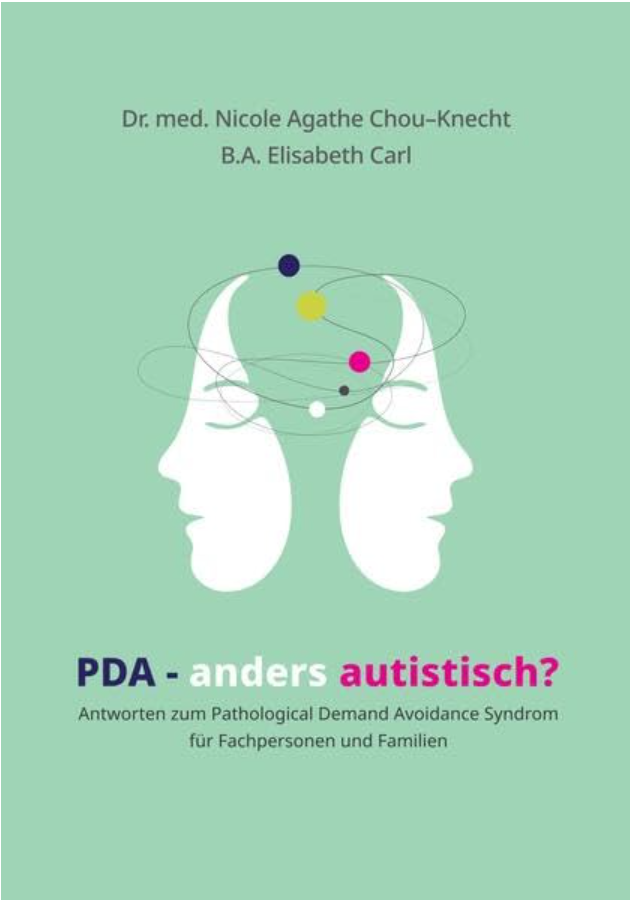
Together with Elisabeth Carl, Dr Chou wrote the first German-language specialist book on PDA. «PDA – anders autistisch? Antworten zum Pathological Demand Avoidance Syndrom für Fachpersonen und Familien» (“PDA – autistic in a different way? Answers on Pathological Demand Avoidance Syndrome for professionals and families”) was published with a foreword by Tony Attwood, one of the world’s leading autism experts. The book offers a comprehensive overview of the current state of knowledge on PDA and integrates scientific findings with the inside views of those affected and their relatives as well as experience from professional practice. In addition to a detailed section on the fundamentals, the book examines the areas of family, education system and therapy, addressing not only challenges but above all resources, approaches and possibilities for support. The psychiatric section provides the basics of PDA diagnostics and sets out neurobiological concepts that are brought together in an integrative conceptualisation model.
Dr Chou’s commitment to raising awareness of PDA is driven by a clear goal: “I am committed to raising awareness of PDA because secondary traumatisation and criminalisation of those affected must be prevented at all costs.” Her message to affected families is encouraging and full of understanding: “I would like to encourage all parents of PDA children. Hold on! Everything you do, invest and fight for on behalf of your beloved PDA children is so worthwhile and is noticed by them very precisely. Fight the systems and relieve your children wherever you can!”
Consequences for practice: what really helps
Understanding the neurobiological foundations of PDA has direct and far-reaching implications for the type of support. What may work for other children with behavioural problems can make the situation massively worse for those with PDA. Traditional behavioural approaches with clear consequences, token systems and reward plans generally lead to escalation rather than improvement in PDA. Direct requests and commands, more strictness and consistency, restrictive measures or the attitude “you just have to want to” achieve the opposite of what is intended.
Instead, counter-intuitive approaches are needed that may seem paradoxical at first glance. Demands must be reduced and disguised. Instead of giving instructions, choices should be offered. An indirect communication style can be helpful, as can humour and playful approaches. Autonomy should be granted wherever possible. The overriding goal is to minimise pressure and to understand the anxiety behind the behaviour.

The PANDA strategy offers a practical framework for supporting people with PDA. PANDA stands for various principles that are central to supporting people with PDA. It is about choosing battles carefully and not fighting every dispute. Anxiety management is at the heart of support. Negotiation and collaboration replace commands and instructions. Demands are disguised and managed so that they appear less threatening. And finally, there must be a willingness to adapt – not only on the part of the child, but above all on the part of the environment.
For schools, this means a fundamental reorientation. Individualised design of demands is needed instead of standardised expectations. Flexible structures must replace rigid rules. Teachers need to develop an understanding of masking and grasp why the child who still seemed cooperative at school falls apart completely at home. Cooperation must replace confrontation, and the child must be seen as a partner on an equal footing as far as possible.
For families, relieving the parents is central. Blame and pathologisation must come to an end. Parents need to learn to accept their own limits and to seek external support. Exchange with other affected families can be an important resource for realising that one is not alone with these challenges.
For therapists, PDA means that they must develop PDA-specific approaches that differ from standard behavioural therapy. The focus is on reducing anxiety, not on modifying behaviour. Trauma-informed work is essential, because many people with PDA have already had traumatic experiences as a result of misunderstandings and wrong interventions. A systemic perspective that includes the family and the wider environment is indispensable.
Why knowledge of PDA can change lives
Early recognition and a correct understanding of PDA can fundamentally change lives. For those affected, a diagnosis or an understanding of PDA can bring immense relief. At last there is an explanation for what they have experienced all their lives. At last they no longer have to see themselves as lazy, difficult or malicious. Self-understanding and identity are strengthened when it becomes clear that one’s own behaviour has neurological reasons. Appropriate support becomes possible, and quality of life can improve considerably. Secondary traumatisation through persistent misunderstandings and inadequate interventions can be prevented.
For families, understanding PDA often dissolves years of guilt and self-reproach. Parents finally understand that they have not failed, but that their child has a particular neurological make-up that requires specific approaches. They can develop effective everyday strategies that actually work, instead of running into the same walls again and again. Pathologisation by professionals who do not understand what PDA is can be avoided or at least better endured. Family cohesion is strengthened when everyone pulls in the same direction and can make sense of the child’s behaviour.
For professionals, knowledge of PDA makes it possible to prevent misdiagnoses and wrong interventions. Therapeutic dead ends can be avoided, in which one tries with standard methods to solve a problem that cannot be solved with these methods. Families can be supported in a targeted way instead of being accused of lacking consistency or parenting ability. Interdisciplinary collaboration between psychiatry, psychology, education and social work improves when everyone involved shares a common understanding of PDA.
The Biomarker Workshop 2025: PDA in the context of multimodal diagnostics
Dr Chou-Knecht’s talk at the Biomarker Workshop 2025 fits seamlessly into the overall theme of the workshop. The workshop is devoted to integrating different diagnostic levels for precise, individualised psychiatry. While other talks focus on electrophysiological biomarkers such as EEG and event-related potentials, Dr Chou shows how clinical observation, neuropsychological diagnostics and neurobiological understanding must work together.
The multimodal perspective on PDA comprises different levels, all of which are justified. The clinical interview captures the subjective world of those affected and allows careful behavioural observation. Neuropsychological tests objectify cognitive and executive functions and reveal strengths and weaknesses. The neurobiological concept helps to understand the underlying mechanisms and explains why the behaviour occurs as it does. Finally, the systemic perspective includes family and school contexts and takes into account that behaviour always arises in interaction with the environment.
Even though no specific biomarkers for PDA are currently established, Dr Chou’s work impressively shows the importance of neurobiological explanatory models for destigmatisation. When we understand that PDA is a neurological particularity and not a parenting problem, this changes the entire approach. Integrating different levels of information and individualised, profile-specific approaches are at the heart of modern, precise psychiatry – not only in ADHD or depression, but also in autism spectrum disorders with a PDA profile.
What to expect on 11 December
Dr. med. Nicole Chou-Knecht will speak at the Biomarker Workshop 2025 from 11.30 am to 12.30 pm. In her talk “Pathological Demand Avoidance – a neurobiological profile within the autism spectrum?” she will give a comprehensive introduction to the PDA profile. She will set out neurobiological and neuropsychological explanatory concepts and highlight the diagnostic features that allow differentiation from other conditions. The consequences for support and therapy will be discussed, as will the significance of PDA for everyone involved – those affected, families and professionals. She will share practical approaches from 15 years of clinical experience as a systemic therapist and show what really works in working with people with PDA.
The talk is aimed at child and adolescent psychiatrists who want to improve their diagnostic differentiation and avoid misdiagnoses. Psychologists and psychotherapists will gain insight into PDA-specific therapeutic approaches. For professionals in paediatrics and general practice, the focus is on early recognition and appropriate referral. Educators and teachers will learn what adjustments at school can look like and develop a better understanding of their pupils’ behaviour. Social workers will receive ideas for the systemic support of families. Parents and relatives will gain understanding and learn everyday strategies. And those affected can deepen their self-understanding and strengthen their identity.
From misunderstanding to understanding
PDA is more than a behavioural profile – it is a call for a change of perspective. Instead of labelling children with PDA as difficult to raise, oppositional or behaviourally disturbed, understanding the neurobiological foundations enables an approach that is both compassionate and effective. Dr Chou-Knecht’s work impressively shows that when we recognise the anxiety behind the behaviour, when we understand the autonomic nervous system, when we see masking and exhaustion – then we can finally offer the right support.
This is precision psychiatry in the best sense. It is about recognising individual particularities, understanding neurobiological mechanisms and deriving suitable interventions from them. It is not about treating all children the same, but about treating each child in a way that corresponds to their neurological make-up. It is not about standardising behaviour, but about understanding and supporting people in their individuality.
The Biomarker Workshop 2025 offers the opportunity to deepen this understanding and to learn from one of the leading experts in the German-speaking world. Join us on 11 December 2025 in Zurich and broaden your understanding of autism, PDA and neurobiologically grounded diagnostics. It is worth it – for your professional practice, for the families you support and above all for the children and adolescents who depend on our understanding.
Further information and registration can be found at www.gtsg.ch. The workshop is organised by the Brain and Trauma Foundation Grison and is aimed at all professionals who work with children and adolescents, as well as interested parents and those affected.
Literature and further information:
Chou-Knecht, N. A. & Carl, E. (2024). PDA – anders autistisch? Antworten zum Pathological Demand Avoidance Syndrom für Fachpersonen und Familien. Mit einem Geleitwort von Tony Attwood.
Further information can be found on the websites of PDA-Schweiz (pda-anders-autistisch.info) and FAPDA (pda-autismus-verein.org) and on Instagram at @pda_schweiz.
This article was produced as part of the communication for the Biomarker Workshop 2025, organised by the Brain and Trauma Foundation Grison. Final editing was carried out by Dr Nicole Chou-Knecht, who therefore also holds the copyright. Reprints therefore require the consent of Dr Chou-Knecht.