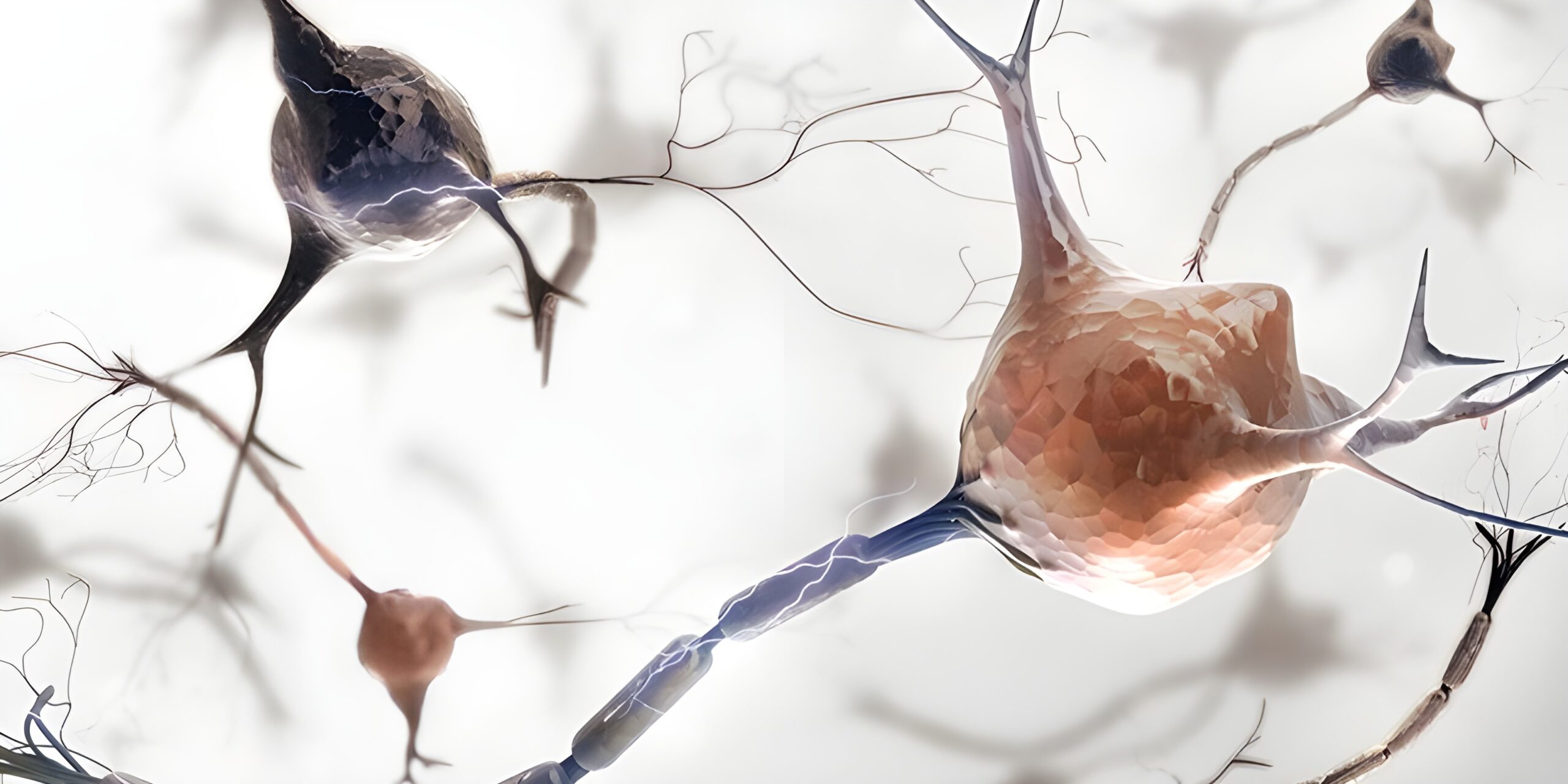
Why autism, sensitivity and stress are connected — and what follows for everyday life
Part 2 of two. Part 1 — The Dimension Beneath the Diagnoses — has been online since 5 September and announces this text.
The previous post asked whether sensitivity is the dimension beneath the diagnoses — the common denominator of ADHD, autism and PTSD. That question is open, and it remains so. This text starts one level deeper, with something less contested: What happens to a person whose perception filters less when, day after day, they move through an environment designed for people with average filtering?
The answer is unspectacular and far-reaching at the same time: they use up more. Not once, but continuously.
1. It is not the single stimulus that counts, but the sum
The common misconception about sensory sensitivity is that it shows itself in individual events — the one restaurant that was too loud, the one label in the jumper. That is how the people around experience it, because they only see the moments when something tips over.
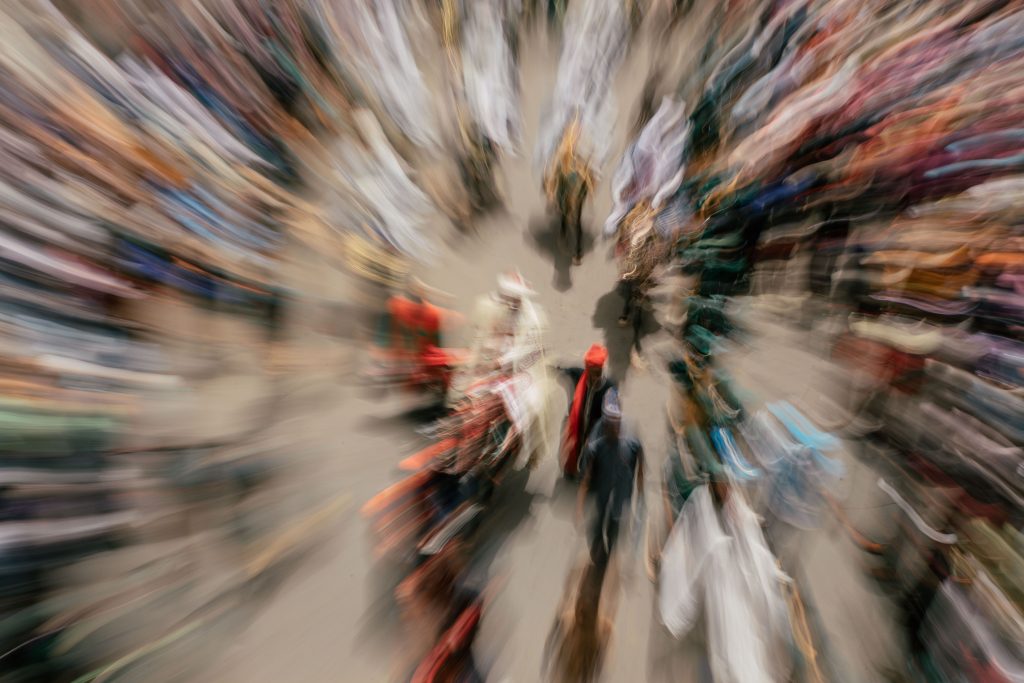
From the inside it looks different. An open-plan office with flickering lights, a classroom with twenty-five children, a station in the evening rush hour — these are not events but conditions. Anyone who cannot filter them out is working the whole time. And if there is no recovery between two such conditions, the load never drops back to baseline; it starts a little higher the next morning.
That is why, at the end of such a day, a trifle — a change of plan, a question at the wrong moment — is enough to trigger something that looks from the outside like a wildly excessive overreaction. It is not. It is the sum of the day, made visible at its last point.
2. What “less filtering” means
There are several explanatory models for why filtering works differently, and they are not mutually exclusive.
One argues via prediction: perception is not reception but a continuous comparison between what the brain expects and what arrives. Anyone who consistently treats deviations from expectation as significant perceives more details — and has to process more of them. The other argues via intensity: neural circuits that react more strongly and learn faster create a world that is more intense than it needs to be. Both are models that have proved themselves in part and remain open in part.
What is well supported empirically is a different connection: uncertainty. In a study of 64 autistic and 85 typically developing children aged six to fourteen, intolerance of uncertainty and anxiety together explained around half of the differences in sensory sensitivity among the autistic children — and around one fifth among the typically developing children (Neil et al. 2016). This is not a statement about causes, but it shifts the perspective: sensory sensitivity does not stand on its own; it depends on how predictable the world is at that moment.
For everyday life this means something very practical. Announced noise is different noise from unannounced noise.
3. The link with anxiety and depression is clear — its direction is not
That sensory over-responsivity goes hand in hand with psychological strain is one of the more stable findings in this field. A meta-analysis of 63 studies with 11,659 participants found associations between hypersensitivity and anxiety and depression that the authors themselves classify as medium to large; for hyposensitivity — that is, reduced responsiveness to stimuli — the associations were considerably weaker and, for depression, not significant (Chen et al. 2024).
These figures, however, do not say what many read into them. The data are predominantly cross-sectional: they measure what occurs at the same time. Whether sensory sensitivity produces anxiety, whether anxiety sharpens perception, whether both stem from a third factor or whether everything reinforces everything else — this cannot be decided from them.
We consider the fourth possibility the most plausible, and we say clearly that this is an assessment, not a finding.
4. Camouflaging: the most costly of all adaptations
There is a burden that appears in no sensory statistics because it is socially successful: constantly adjusting one’s own behaviour to what is expected. Holding eye contact even though it is exhausting. Prepared sentences for the staff room. Imitating how others move and respond.
It works — and it may be the reason why an autism diagnosis is only made at forty. But it comes at a cost. In a study of 305 autistic adults, more camouflaging was associated with more pronounced symptoms of generalised and social anxiety and with stronger depressive symptoms. The association remained when age and the level of autistic traits were taken into account — though only to a small extent beyond them, and more clearly for anxiety than for depression (Hull et al. 2021).

The obvious next step is where it gets interesting, and in a direction one would not expect. A longitudinal study of 332 autistic adults with two measurement points around two years apart asked whether camouflaging causes psychological strain. It found no robust evidence for this; the only detectable effect ran counter to expectation and was small, and baseline strain did not predict changes in camouflaging (van der Putten et al. 2025). The direction of the association therefore remains unresolved — but the simple reading “masking makes you ill” is not supported by the best data available so far.
For practice this matters less than it sounds. Anyone who constantly holds themselves together is performing work that no one sees and for which no one plans recovery. That remains true regardless of which way causality runs.
5. Meltdown, shutdown, burnout — what lies at the end of the chain
When too little recovery accumulates over weeks and months, a state emerges that autistic adults describe with remarkable consistency. A qualitative study — based on 19 interviews and 19 publicly available online sources — summarised it as persistent exhaustion lasting typically at least three months, loss of previously available skills, and reduced tolerance of stimuli — arising from chronic life stress and a mismatch between demands and capacities in the absence of support (Raymaker et al. 2020). The term autistic burnout does not come from the clinic but from autistic people themselves; research adopted it because it describes something for which there was no better category.

Shorter-term and more visible are meltdown and shutdown. In an interview study with eight autistic children and adolescents aged eight to eighteen, participants described a meltdown as being overwhelmed with loss of control and physical symptoms — tense muscles, feeling hot, rapid breathing, blurred vision — and a shutdown as freezing, an inward blockage, up to falling silent. As triggers they named unexpected changes of plan, sensory overload and accumulated strain (Phung et al. 2021). Eight participants is a very small group; the value of this study lies in the consistency of the accounts, not in their generalisability.
It is worth stating this soberly: neither is a behavioural problem in the sense of defiance or refusal. Both are states in which an overloaded system shuts down.
6. What the body says about it — and what it does not yet say
At this point the question naturally arises whether this constant strain can be measured. The honest answer is: not as easily as one would hope.
A systematic review of 31 studies on cortisol in autism found an inconsistent picture — in children and adolescents, elevated, blunted and unremarkable stress responses side by side; in adults, largely unremarkable values, although only a few studies exist there. Another finding of the same review is notable: the subjectively reported stress level was considerably higher, without being reflected correspondingly in the biological measures (van der Linden et al. 2022).
This is either a sign that cortisol is the wrong measure for this kind of strain, or that the groups studied were too heterogeneous to show a signal. Both argue for measuring closer to the processing itself rather than to its hormonal consequence. In our work with the University of Skopje, the EEG channels that contributed most to distinguishing autistic from typically developing children were precisely those we attribute to areas of visual processing (Tenev et al. 2025) — a pointer to the sensory side, not proof of the stress chain described here. The two questions are not the same, but they lie side by side.
7. What follows from this
If the chain holds — less filtering, more effort, too little recovery, breakdown — then most interventions start in the wrong place. They target the person: tolerate stimuli better, adapt, become less conspicuous. That works in the short term and, in the long term, raises exactly the baseline load that is at issue.
The alternative is less visible and more laborious, because it involves others: reduce the sensory load where it can be reduced. Announce transitions and changes, because predictability lowers the effort. And treat recovery not as a reward but as part of the plan — breaks that are not social; time without an audience.
This is not a treatment recommendation, and it does not replace treatment. It is the observation that part of what is treated as a symptom is a response to conditions that can be changed.
For diagnostics, the same follows as in the previous post: anyone who records only the category does not see how sensitive someone is and how much they compensate. Both belong to the description of a person — and both determine what helps. At the Biomarker Workshop 2026 on 10 December in Zurich, sensitivity is one of four poles; how it can be captured is one of the questions up for discussion there.
What this text does not show
The chain described is a model, not a proven mechanism. The associations between sensory sensitivity, anxiety, camouflaging and exhaustion are well supported; their direction is not — and for camouflaging, the only longitudinal study so far even argues against the obvious reading. It is possible that in practice the chain runs in several directions at once, and it is possible that it looks different in different people.
The studies on meltdown, shutdown and burnout are based on small samples and self-reports. That is the appropriate approach to an experience that cannot be captured otherwise — but it does not replace a prospective study. And the question of whether this constant strain can be mapped physiologically is open; the available cortisol data do not settle it.
We think this is worth mentioning because a plausible model is seductive. That something fits together does not mean that it is so.
Sources
- Chen, Y.; Xi, Z.; Saunders, R.; Simmons, D.; Totsika, V.; Mandy, W. (2024): A systematic review and meta-analysis of the relationship between sensory processing differences and internalising/externalising problems in autism. Clinical Psychology Review 114, 102516. DOI 10.1016/j.cpr.2024.102516
- Hull, L.; Levy, L.; Lai, M.-C.; Petrides, K. V.; Baron-Cohen, S.; Allison, C.; Smith, P.; Mandy, W. (2021): Is social camouflaging associated with anxiety and depression in autistic adults? Molecular Autism 12, Art. 13. DOI 10.1186/s13229-021-00421-1
- Neil, L.; Choque Olsson, N.; Pellicano, E. (2016): The Relationship Between Intolerance of Uncertainty, Sensory Sensitivities, and Anxiety in Autistic and Typically Developing Children. Journal of Autism and Developmental Disorders 46(6), 1962–1973. DOI 10.1007/s10803-016-2721-9
- Phung, J.; Penner, M.; Pirlot, C.; Welch, C. (2021): What I Wish You Knew: Insights on Burnout, Inertia, Meltdown, and Shutdown From Autistic Youth. Frontiers in Psychology 12, 741421. DOI 10.3389/fpsyg.2021.741421
- Raymaker, D. M. et al. (2020): «Having All of Your Internal Resources Exhausted Beyond Measure and Being Left with No Clean-Up Crew»: Defining Autistic Burnout. Autism in Adulthood 2(2), 132–143. DOI 10.1089/aut.2019.0079
- Tenev, A.; Markovska-Simoska, S.; Müller, A.; Mishkovski, I. (2025): Entropy and Complexity in QEEG Reveal Visual Processing Signatures in Autism. Brain Sciences 15(9), 951. DOI 10.3390/brainsci15090951
- van der Linden, K.; Simons, C.; van Amelsvoort, T.; Marcelis, M. (2022): Emotional stress, cortisol response, and cortisol rhythm in autism spectrum disorders: A systematic review. Research in Autism Spectrum Disorders 98, 102039. DOI 10.1016/j.rasd.2022.102039
- van der Putten, W. J.; Mol, A. J. J.; Radhoe, T. A.; Torenvliet, C.; Agelink van Rentergem, J. A.; Groenman, A. P.; Geurts, H. M. (2025): Camouflaging in autism: A cause or a consequence of mental health difficulties? Autism 29(10), 2604–2617. DOI 10.1177/13623613251347104