-
35 minutes that never reach the assessment
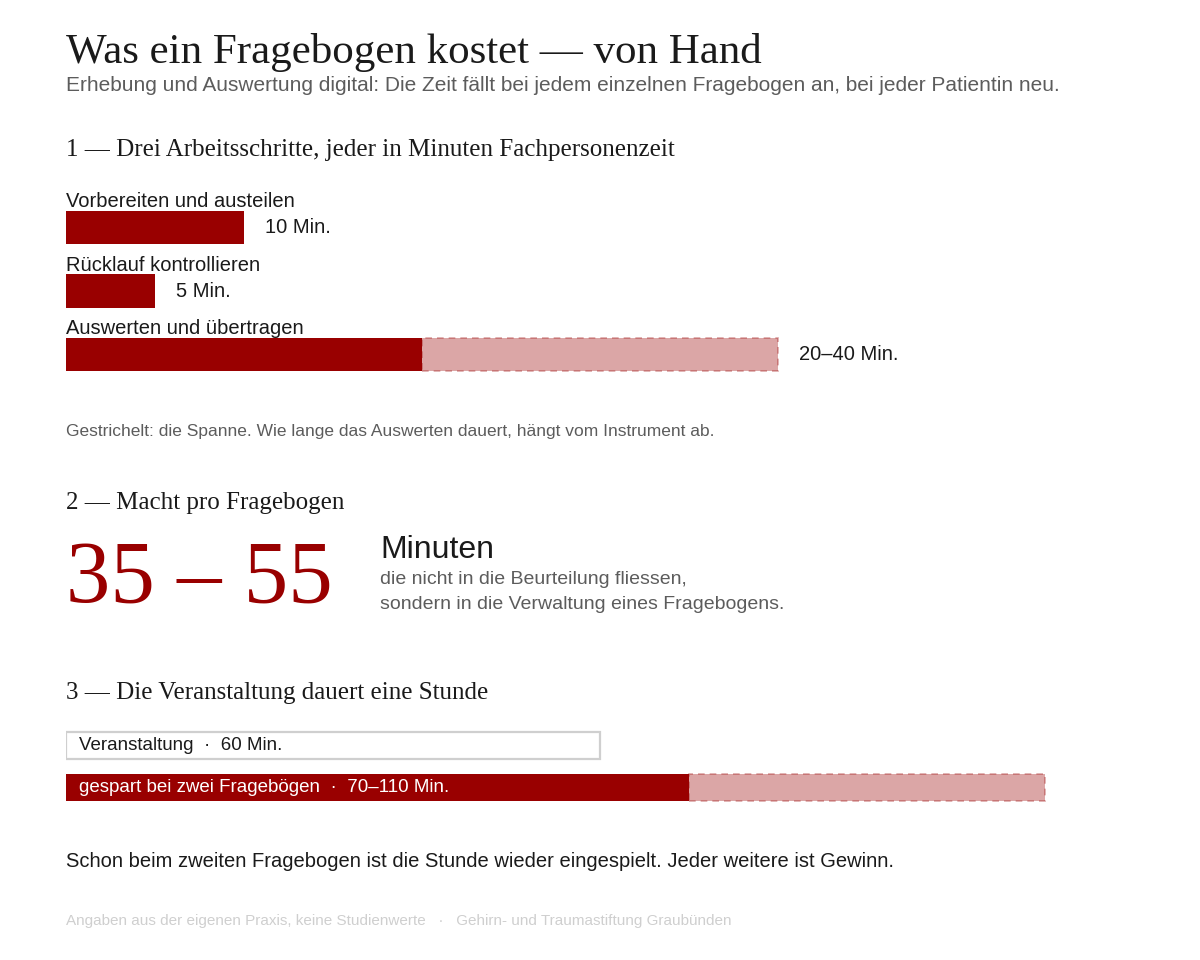
What a clinical questionnaire costs when done by hand — and why nobody bills for it There is a kind of work that appears in no service billing, in no quality report and in no discussion about waiting times. It arises before the actual work begins, and it arises anew every time. A clinical questionnaire…
-
Yes or no? Why a questionnaire has to do more

Almost every assessment begins with a questionnaire. Parents tick how often their child loses the thread. Teachers judge how long it stays with a task. Adults answer how much noise bothers them. At the end there is a number — and next to the number a line: the cut-off. Above it means conspicuous, below it…
-
HBImed apps explained live: online session on 5 October 2026
Note: This session has already taken place. Monday, 5 October 2026, 6:00–7:00 p.m. (CEST) – online via Zoom, about one hour. The Brain and Trauma Foundation Graubünden presents the two HBImed apps: the questionnaire app and the tracker app. Participation is free of charge. Diagnostics and follow-up depend on data that is collected in a…
-
HBImed Therapy Tracking: making the course of therapy visible
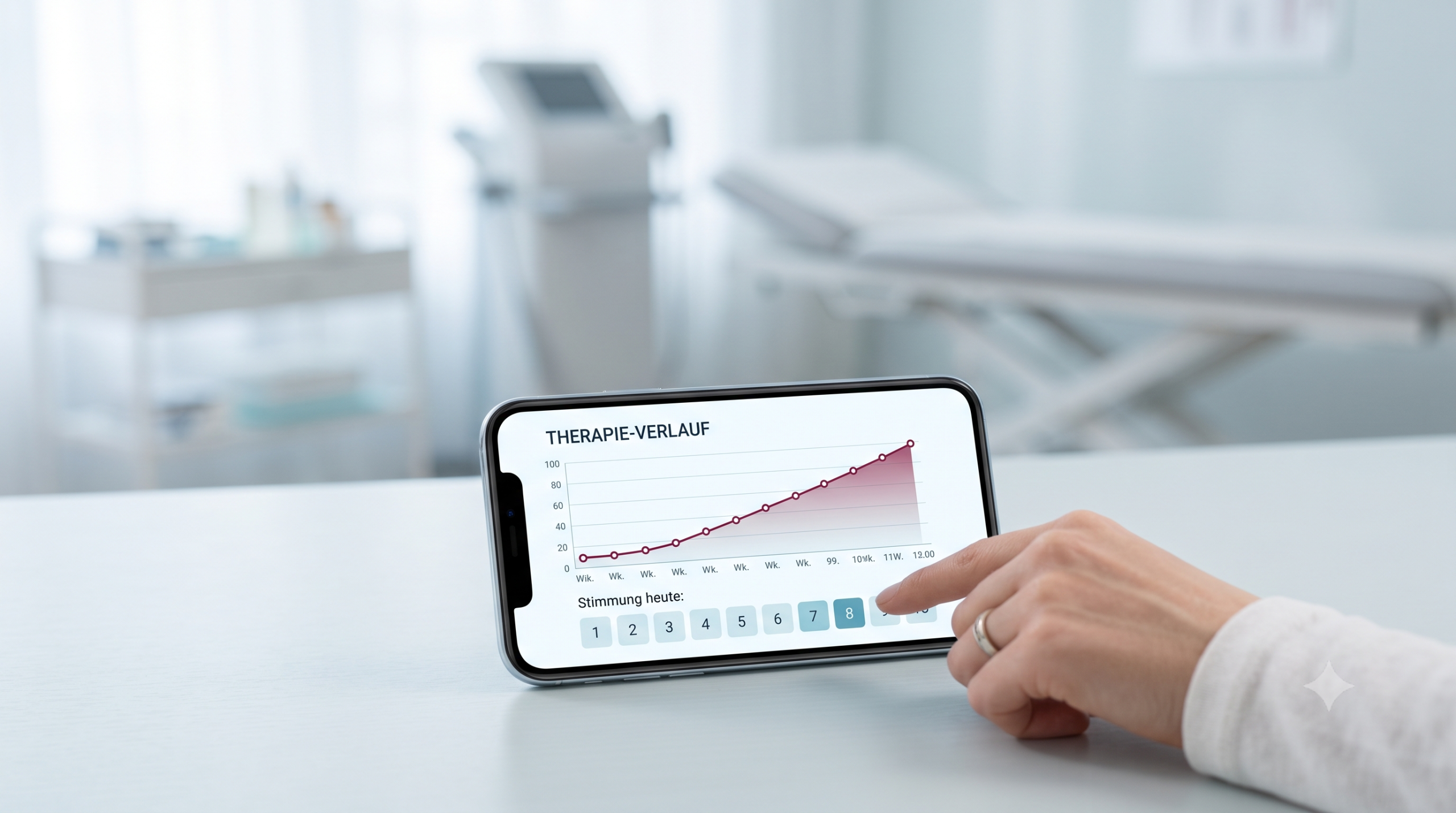
A single appointment only ever shows one moment in time. How a patient is doing between sessions often stays invisible – and decisions then rest on memory rather than data. This is exactly where HBImed Therapy Tracking comes in: the tool accompanies patients between appointments and turns individual snapshots into a picture of their development. Developed…
-
The HBImed Questionnaire App: 50 clinical questionnaires, digital and automatically scored
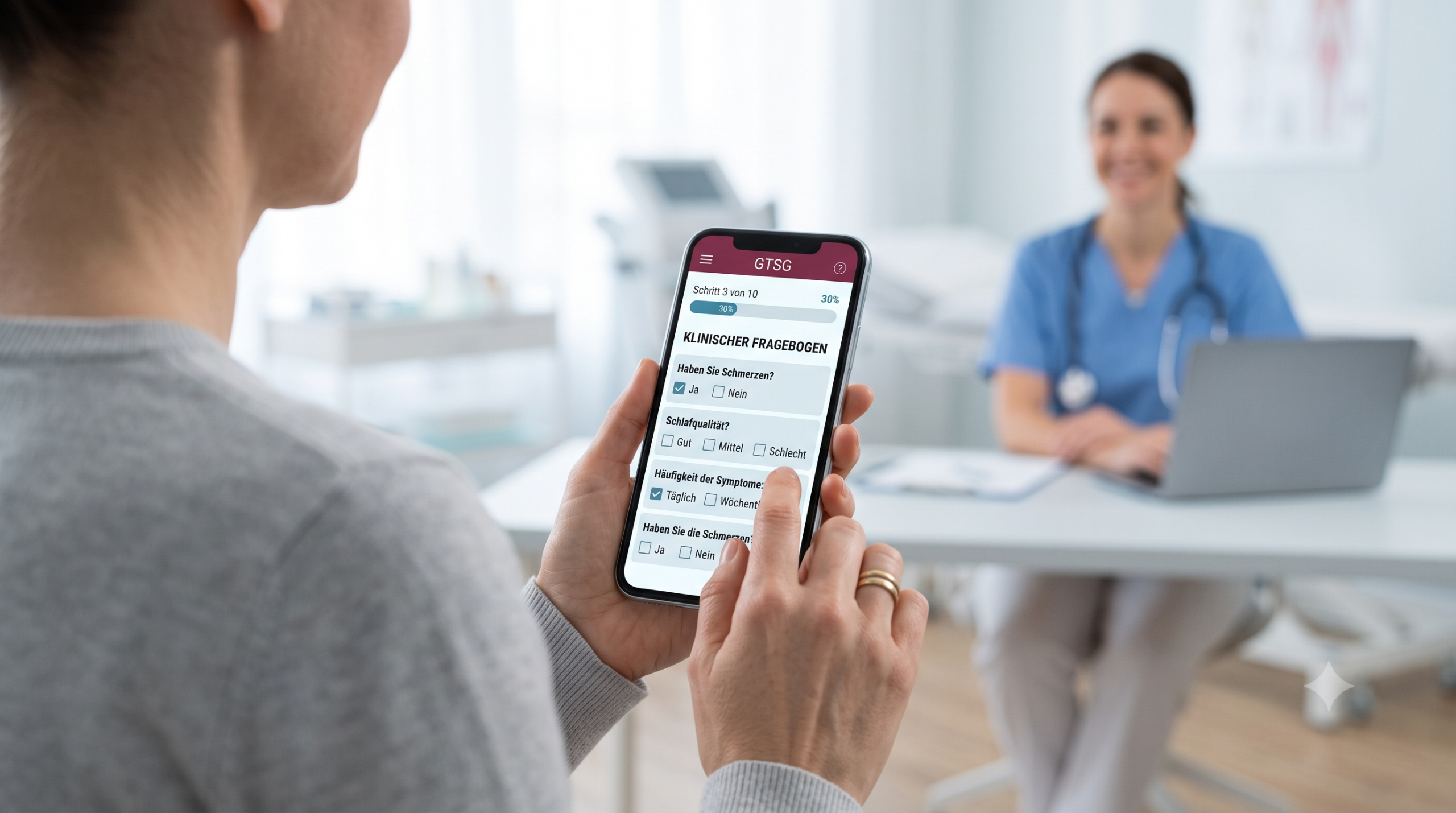
Clinical questionnaires are part of everyday life in many practices – yet sending them out, collecting them and scoring them on paper costs time and is prone to error. The HBImed Questionnaire App maps this entire workflow digitally: from inviting the patient to the finished, scored result. It was developed by the GTSG (Brain and…
-
Neurofeedback Protocol Designer
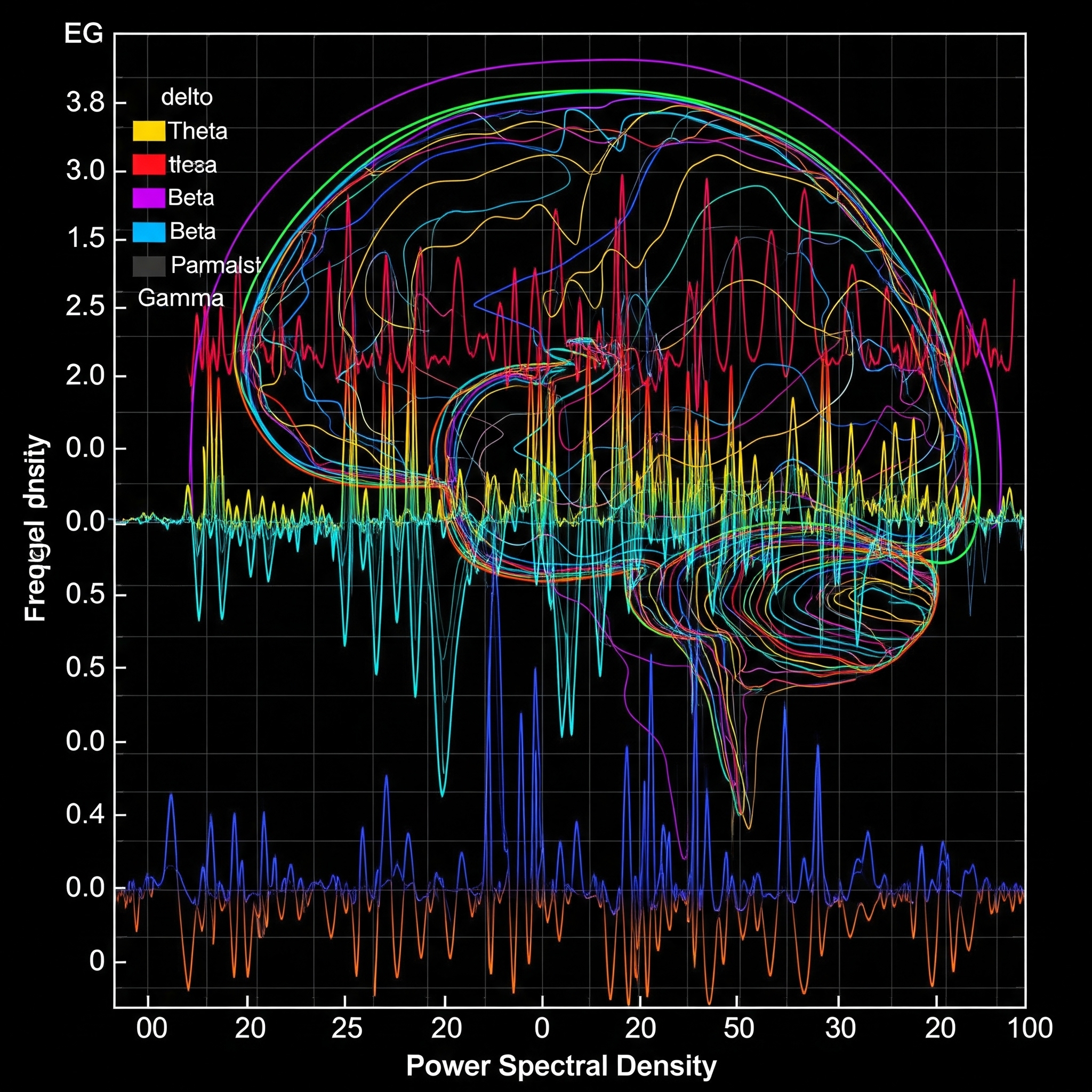
The need for neuro-physiological diagnostics for personalized Neurofeedback protocols – An integrative view on symptoms, EEG, ERP, Arousal, and vigilance Neurofeedback is a promising form of therapy for a variety of psychological and neurological disorders, including ADHD, affective Dysregulation, sleep disorders, or substance use problems. Their effectiveness is, however, the person-centered Protocol of choice, which,…
-
HBImed database version 3.0 web-based

Save the Date · Biomarker Workshop 2026 — 10. Dezember 2026, Paulus Akademie Zürich Jetzt anmelden →
Save the Date · Biomarker Workshop 2026 — 10 December 2026, Paulus Akademie Zurich Register now →