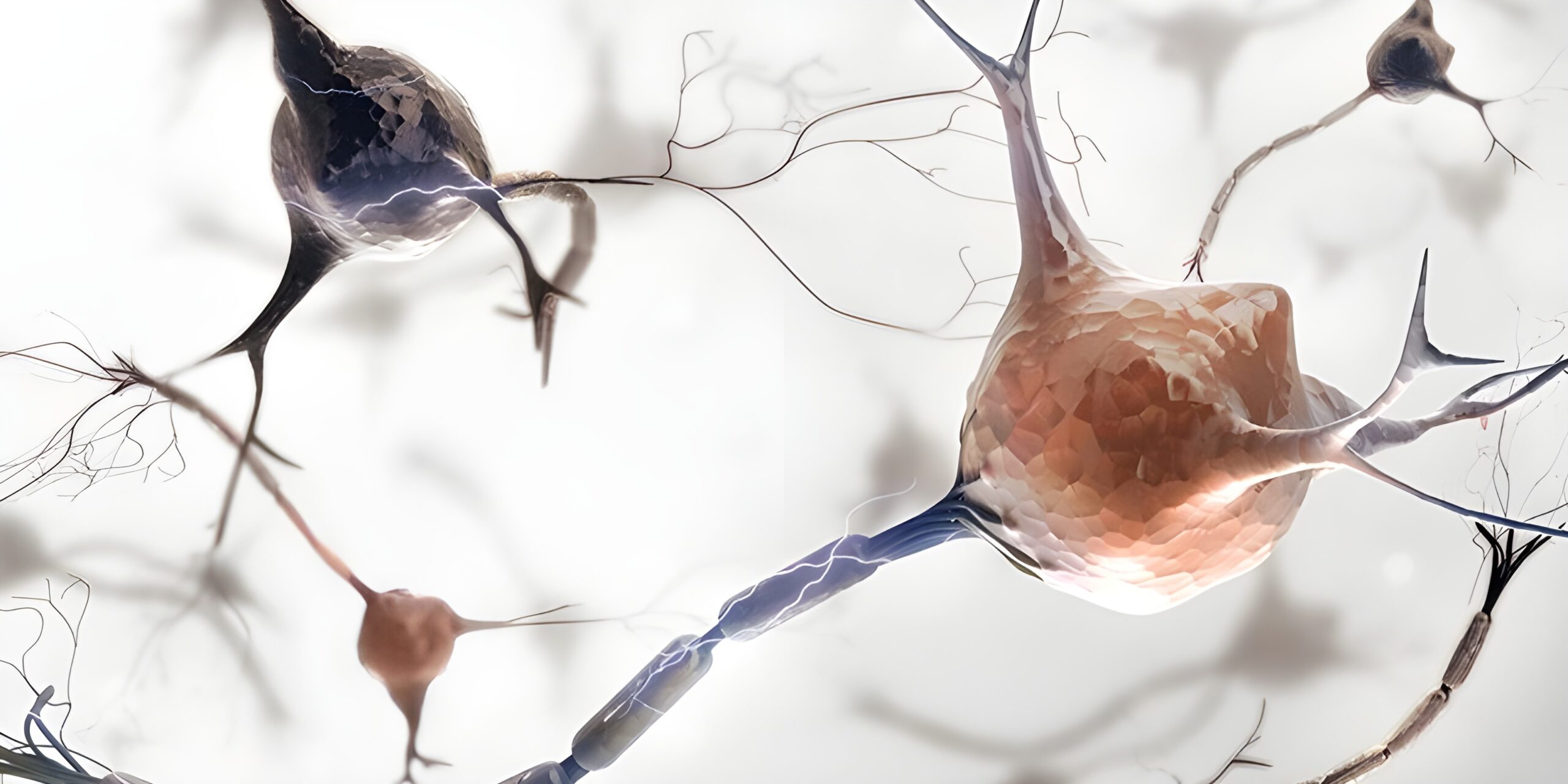
A new bachelor’s thesis at ZHAW investigates whether EEG biomarkers can help detect comorbid depression more reliably in adults with ADHD. The results are encouraging – and at the same time mark the limits of purely neurophysiological diagnostics.
A constant diagnostic balancing act
Anyone who deals with adult ADHD in practice knows the problem: difficulty concentrating, reduced drive, emotional instability, sleep problems – all these symptoms occur in ADHD as well as in depression. And because the two conditions frequently occur together (estimates speak of up to 50 per cent comorbidity), the same question arises again and again: is it “only” ADHD – or is there also depressive symptomatology that requires treatment? Treatment planning, prognosis and, not least, the quality of life of those affected depend on the answer.
Conventional diagnostics relies on interviews and questionnaires – proven instruments, but dependent on patients’ self-report and on the professional’s interpretation. Objective, biologically grounded markers could usefully extend this basis. This is exactly where a new bachelor’s thesis by Dominic Chanson and Simon Assmann comes in, written at ZHAW in 2026 under the supervision of Andreas Müller.
The research question
Using anonymised routine data from a neuropsychological institution, the authors examined 306 adults with ADHD-associated symptoms. Based on the BDI-II, two groups were formed: ADHD without (n = 140) and ADHD with clinically relevant depressive symptoms (n = 166). The central question: can these two groups be distinguished on the basis of EEG-based parameters? Two measures were examined – the so-called arousal index (a measure of cortical activation) and vigilance parameters (level of wakefulness and its stability) – under three measurement conditions: rest with eyes closed, rest with eyes open and a cognitive task (VCPT).
What was found
Three findings stand out.
First, patients with comorbid depression consistently showed higher arousal values – at rest as well as under cognitive load, with a clear emphasis on the left hemisphere during the task. This fits the established literature on frontal alpha asymmetry in depression: the left prefrontal cortex, responsible for goal-directed action and positive affect regulation, typically shows an altered activation signature in depression.
Second, a load gradient became visible: the group differences emerged most clearly under cognitive demand and decreased as the load decreased. This suggests that neurophysiological dysregulation becomes visible above all where the brain is actually challenged – a pattern that is also clinically coherent, because cognitive impairments in depression often only show up under demand.
Third, EEG markers alone did not provide clinically sufficient classification performance (AUC ≤ .62). Only the combination of the neurophysiological data with the SENS questionnaire on sensory processing sensitivity substantially raised predictive power to AUC = .71 – not perfect, but a clear gain.
Also noteworthy is what was not found: the vigilance parameters themselves did not differ significantly between the groups. Neither the level of wakefulness nor its range of fluctuation distinguished ADHD from ADHD plus depression. The authors interpret this as a possible indication of opposing regulatory effects that partly cancel each other out in the comorbid group.
What this means for practice
One could read the finding optimistically: “EEG can detect depression in ADHD.” On closer inspection, the message is more nuanced. After statistical control for the effect of sex, the multivariate group effect was no longer significant – the authors therefore deliberately classify their findings as exploratory. And the AUC values do not reach the clinical threshold of .80, above which reliable individual diagnosis would be possible.

The real insight lies elsewhere: neurophysiological biomarkers do not unfold their potential as a stand-alone test, but within a multimodal diagnostic process. Baseline EEG measurement, cognitive provocation and questionnaire screening complement each other to produce a statement that none of the three components can provide alone. In future, the left-hemisphere load index could be an interesting additional marker – as one voice among several, not as the sole decision-maker.
Looking ahead
For the foundation, the thesis confirms a course we have been pursuing for years: objective methods and clinical experience belong together. Reinterpreting the arousal index as a dysregulation index – rather than as a linear measure of activation – opens new perspectives for neurophysiological diagnostics, particularly in complex comorbidities.
For those who want to delve deeper into the methodology and application potential of these methods: the Biomarker Workshop 2026 of the Brain and Trauma Foundation Grison addresses exactly these topics. Details and registration can be found at Registration Biomarker Workshop 2026.
Many thanks to Dominic Chanson and Simon Assmann for their careful and methodologically elegant work.
Source: Chanson, D. & Assmann, S. (2026). Kortikale Aktivierungsdysregulation bei komorbider depressiver und ADHS Symptomatik – EEG-basierte Arousal- und Vigilanzparameter bei Erwachsenen mit ADHS-assoziierter Symptomatik mit und ohne depressiver Symptomatik: Eine explorative Klassifikationsanalyse [Cortical activation dysregulation in comorbid depressive and ADHD symptoms]. Bachelor’s thesis, ZHAW Zurich University of Applied Sciences, School of Applied Psychology. Supervisor: Dr. Andreas Müller.